the months move on and the cold dark days of winter begin to fill with the light and warmth of spring. plants awaken in the garden spreading their leaves and the flowers blossom. animals play and skip across the grass with a spring in their step. literally. you would think with all this light and energetic joy writers would be happy. no. spring is the cursed month.
you may ask how i come to describe so a glorious time of year as cursed. well let’s look at the facts from the writer’s point of view. first all this sunshine and warmth. annoying. you are trying to buckle down to a particularly difficult rewrite of a paragraph in your dark and dinghy corner of an attic room with the cobwebs in the corners of the ceiling sagging with the dust of neglect. and what happens? sunlight breaks through the grime of the window and shines upon your desk lighting up your laptop screen making it difficult to see. the suns warmth beckons you outside.
‘come on,’ it says. ‘take a break. enjoy the sun.’
and you think to yourself: i will take a break. and before you know it you are sat on a whicker chair with a cool rosé in hand taking in the sun rays. time ticks on. you have another chilled drink. and before you know it the day has gone. the sun has set. and no work has been done. a whole day’s writing lost to you. never to be regained. instead you now have a feeling of reproach and guilt consuming you as you make your way indoors to the kitchen to make a chilled salad. all because spring is here.
and that is not the only way the season is cursed. picture this. you are in your attic tapping away at the keyboard. the edits are going well. you are fully focused. in the zone of creativity. then in the corner of your eyes there is a slight itch. just slight at first. you try to ignore it. but the itch grows. so you stop your typing and rub your eyes. you have fallen out of the zone. you try to claw your way back. but now your nose is twitching. you are going to sneeze. you try to hold it back. nose twitching violently. a sneeze blasts out that echoes across the attic room. filling the space. bouncing off the walls. another. and another. and you are reduced to a sore-eyed-weeping-water-sneezing-violently-wreck. you can not think. mind numbed. cloudy. all thoughts on the novel lost. you have hayfever. the fever from hay. and it is a fever. the eyes leak. your nose drips. your face feels warm.
you search for the hayfever medication. you hold the purple box in your hand but it is empty. so you have to leave the house. leave your writing. and go to the chemist where you purchase a box of medication at a price slightly too painful. you could have got new pens with that money. paper for the printer. but instead you had to buy medication. you go home and swallow a tablet. but of course there is no instant cure. hayfever medication doesn’t work that way. you have to build up a resistance. it takes time. so all you can do whilst waiting is lie on the sofa with a box of tissues to hand and think about the writing you could be doing and blame the god of genetics or something.
so enjoy spring if you can. enjoy the sun and flowers and the pollen on the trees and walks in the woods through dappled light. but remember the harm that it does. remember the curse it puts poor writers under. the curse of spring.
Tag Archives: novel
plotter or a pantser?
it is said there are two kinds of writers: plotters and pantsers. if you’re new to writing and wondering what does that mean, then let me explain.
plotters map out the entire outline of their book. they can plan characters, scenes, character arcs, time lines, settings and so on.
pantsers approach a book by the seat of their pants. they don’t plan anything. they just see the blank page and go for it!
i never quite knew where i fitted in to these groupings when writing. my first book i wrote without any planning. i just knew what it was about and i sat down and wrote it. it was a children’s book of about 18,000 words and those words and the story just sprung to mind. i knew who the main character was and what the story was about. it was a straight forward tale which followed a main character on their humorous adventure.
the second book needed a little planning. i wrote a sentence saying what each chapter was about. it was still mainly driven by one main character but their was a sub-plot with a few others characters involved. however it was still a straight forward story.
the next three were outlined in a similar way. a brief couple of sentences for each chapter. maybe a bullet point of a key detail to remember but no more than that. they all had linear plots that were fairly straight forward.
the next book really needed some plotting. well, more plotting than i was used to. it was based on old detective noir and so i needed to know key events and when clues were to be revealed. most of the characters were pre-planned but some just developed naturally as i wrote. the book took a long time to write and really tested me. i wasn’t used to juggling so many elements and sometimes i forgot things as my notes were still generally brief. 2 or 3 sentences per chapter.
whilst i was writing that book, i took breaks by writing short stories and prose poems. none of these were planned out. just an idea and then write. a complete contrast to the detective novel i was working on. ok. it was my usual dark sense of humour with fantastical elements but besides that there were no connections between them.
so there i was. writing different things. both pantsing and plotting. but with the detective novel was i really a plotter? i have heard of people with multiple postcards outlying the key scenes of a novel; graphs that show character timelines and sciences they’re mentioned in; biographical details for each character; floor plans for locations; maps of worlds. none of that existed when i wrote.
then i found myself waiting on beta readers and so decided to start a new work in progress. something to keep me amused. but this time i went back to pen and paper like i wrote my prose poems. gone was the computer screen for novel writing. gone the side notes. just a pen and paper. and a fuzzy idea. no notes were written down beforehand. no outlining of a plot. no. just pen and paper and that vague idea. and so it began.
it has been said by some that plotting stifles the writing. takes the energy out of it. im not sure the readers of books written that way would agree. i certainly cant tell if a book has been written by a plotter or a pantser. maybe it was more a reflection of how that particular writer felt about having to plot. to lay things out before they got going. of feeling they didn’t have permission to stray from the laid out path. certainly when pantsing a piece you feel free to do what you want. that you’re on a rollercoaster and where it is going you’re not entirely sure. but then there are drawbacks. you have to write more regularly or process a good memory of what you have already written. and you have to be prepared to rewrite and edit to fix the holes you overlooked in your frenetic energy.
having done both pantsing and plotting im not sure what kind of writer that makes me. undecided? maybe there is a place for the undecided writer when approaching a novel.
end of eras
it has been a time of end of eras. things coming to a close or a major change happening after many years of just coasting along. days unchanging. constant. sure.
the first of these changes has been no.1 child finishing their ‘a’ levels and launching themselves onto the world. they are full of ideas and enthusiasm for what lies ahead, edged with a hint of steely determination. i think they are better prepared than i was at the same stage in life. much more knowledgable and wise.
part of this launch was moving out of the house for 10 weeks to do a course in bristol. the last time i was there was probably for an evening when my friends and i dove up from taunton and went to a large warehouse where four punk bands were playing. the headliner was the henry rollins band. i think he was also trying to flog a poetry book as well.
i have mixed emotions about the departure of no.1. i’m losing a buddy who always had something interesting to talk about. a new discovery. there is a space in the house where they were. but i’m also excited to see what will happen on their journey. what new adventures they will report back on. what life holds for them.
the second end was finishing my WIP. my novella. i started it in october 2022 and it has been with me sporadically since then. it has been the hardest piece of writing to write. it was out of my comfort zone. it had a number of elements i had to juggle and they needed to all land successfully. it was also the most planned because of this. i had to make every step right.
i was sporadic in the writing because i made some major changes to my life. changed my working world. made it less certain. and i’m older than when i wrote ‘wishbone billy.’ i don’t have the energy to do the late nights writing. and i find i also lack the focus now since the covid pandemic and lockdown. my ability to concentrate for long periods has dropped. i’m sure there will be a study somewhere which will look at the impact of covid on the mind. on cognitive function. if not, there should be.
and there was the doubt.the great shadow of the imposter raven on my shoulder. waiting. pecking. freezing my mind. it took some battling some days to overcome it and put words to page. to have the confidence in the project. the belief i could do it. i had to keep telling myself i had done it before. i could do it again.
and so three years later the first draft is done. finished. it is out to beta readers who will come back with an honest verdict on the thing. i look forward to hearing. and am beginning to ponder part two of the series. at the moment it is just a vague thought. but it is forming. ticking over. i’m excited by what my mind will generate.
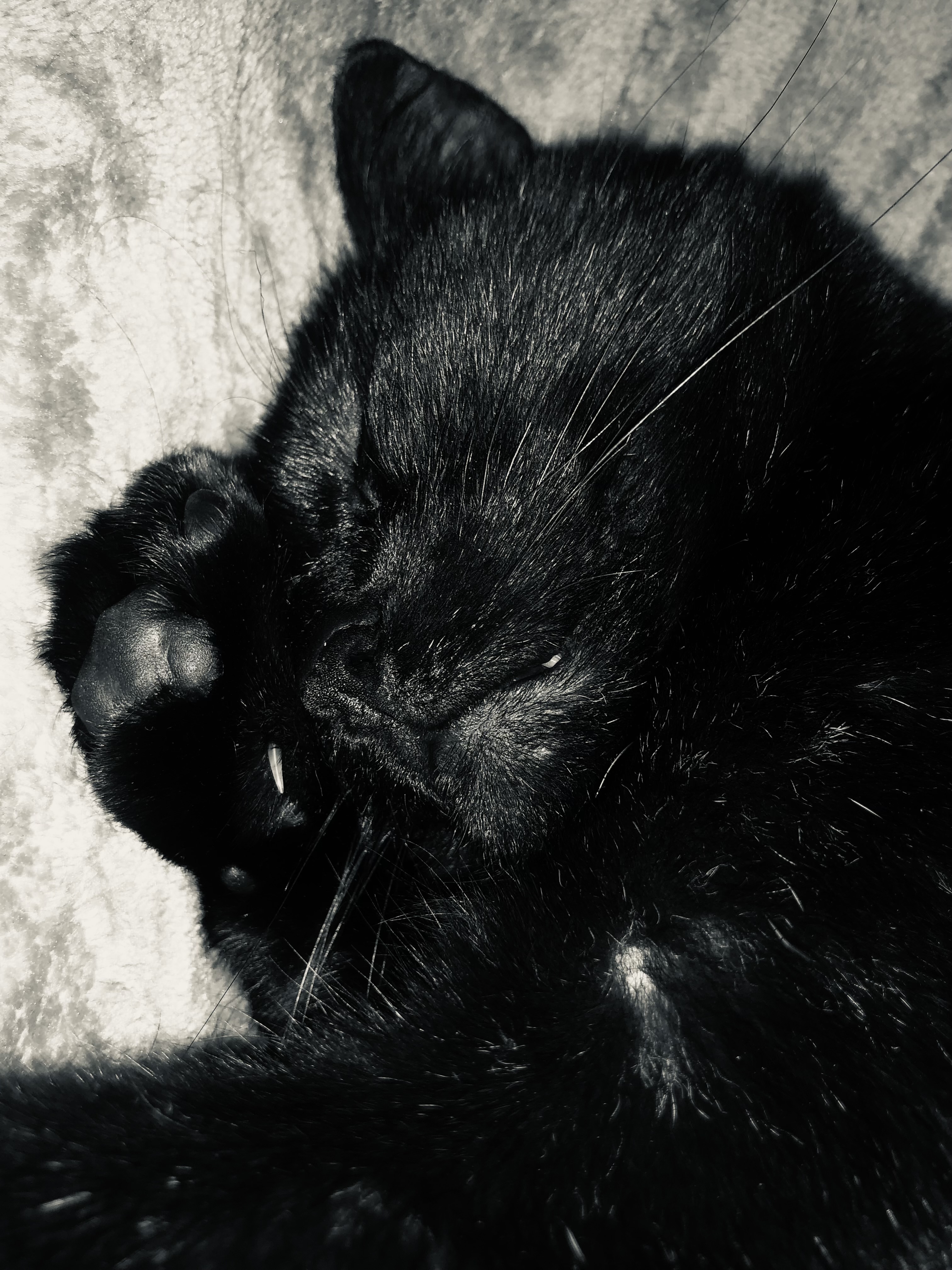
the last end. the last end of the era. was the death of kaos my cat. he has been at my side many a time as i sat writing. he had appeared in many a prosepoem. but his time had come to an end. it was quick. surprising. heart breaking. there is a small space in the house where he should be. but he is not there. and when i sit at night to read or write it is just that bit more lonely. i think there will be the patter of his feet and a jump as he lands on my lap. but there is nothing. just me. my book. my writing.
words
i’ve always had a problem with words. not the deciding on them. not the thinking of them. the focusing on the words to use. the need to reach for a thesaurus because they just won’t come. not that problem. the word count. that’s the issue. no matter how big an idea or how many chapters i seem to always get a low word count.
i plan out my writing. brief lines with a few details what will happen in each chapter. then i begin and write. i sit down at my keyboard and tap away. the idea clear in my mind. full knowledge of the setting and what the character has to achieve in that chapter. i write the scene. describe the setting, add the action and dialogue. build it up as slow as i can. chapter finished. 1500-2000 words. where’s the rest of it? surely i can write longer?
being a two finger typist, i think: maybe its the typing. maybe i should revert back to the old pen and paper. ditch the modern technology. unhamper myself. free myself to write without the distractions a machine brings. but it’s no good. still the same length of chapter. 1500-2000 words. still the problem that the novel is just not long enough for publishers.
perhaps it goes back to me. i’ve never been one to talk lots. always one to listen. speak when i have something to say. something to share. my shaggy dog stories peter out. the dog dies before it gets to the end of the tale. conciseness is in my nature. why use 300 words when a sentence will do? there are some who can talk. really talk. add lots of detail and atmosphere. and write that way. but my thinking has always been why mention the table is red if the colour isn’t important? only mention the details that are important to the plot and events. cut back the chaff.
perhaps my whole approach is wrong. maybe i need to let forth with a wave of unnecessary words. use 100 when 10 would do. but it goes against my grain. perhaps, as i suspect, it is the demanded word counts are wrong that a novel should be the length it should be. should the ‘great gatsby’ be made longer because it doesn’t meet acceptable word counts? max porter’s work lengthened to an epic? or do the publishers need to be more flexible in their approach? is it time for change? perhaps selfish i know. me calling for a revolution just to suit how i write. but think of all the great writing lost because it didn’t meet a required format (i don’t include myself in this).
words. when are many too many? few too few?
hemingway
i first came across hemingway when doing a course on writing at citylit, london. if you don’t know citylit, it’s an adult learning college locate near holborn tube. that big long road that winds it way down pass theatres and hotels to waterloo bridge and the south bank. citylit runs many creative courses and i heard good things about its writing courses and heard they were doable if on a budget. i’m always on a budget.
the courses are often taught by stabilised writers. this one was taught by scott bradfield. we were often set things to read. and he set us the short story ‘hills like white elephants’ to read. i read it. read it again. it was like a revelation to me. here was a writer cutting out loads of description, reams of adjectives and adverbs, to pare back the story to its essence. the writing was like a fresh of air. a chill winter wind that wakes you from a night of over indulgence. it was like hemingway was giving me permission to do something. something i had long thought.
i had studied literature as part of my ba. a diet of hardy, dh lawrence, and george eliot (oh god, george eliot). they loved their long winding descriptions where a hundred words were better than five. long rolling descriptions of the scenery. adjective upon adjective that wound their way across the pages before a character did something. followed by exposition. how they loved exposition.
i followed this by teaching primary and mainly reading children’s literature. children’s literature loved an adverb and adjective. not forgetting a liberal use of simile and as many words for ‘said’ you could think of. so did the national curriculum. this is what they decided good writing consisted of. no hemingway style for them. you had to use lots of adverbs and adjectives to tick the boxes. not forgetting the whole range of punctuation.
it is not surprising then that this is what i thought writing was. had to be. i had been fed a diet of word types. all the word types. used liberally and often. yet i was not satisfied. why did we have to mention all the senses? in every description? surely, you should focus on the important ones for that scene? and did we really need long passages of description to describe a setting whilst the character was left in limbo? doing nothing. waiting for us to finish. my thinking was we should treat the setting as a character. and f important to the plot. then we spent time on it. but if passing through. was there a need? i began to have doubts over the way writing was taught and the way i wrote.
so reading hemingway gave me approval of my ideas. to leave the adverbs behind. use adjectives sparingly. use five words instead of a hundred. cut writing to the bone. to the essential. to what i considered important. gone were adverbs. i went further. reducing articles. conjunctives. pairing back the range of punctuation. the length of a sentence. reducing the sentence to its minimum. to the minimal point at which it could still be understood.
my prose-poetry is a concentrated version of that. my short stories and the novel i’m working on. less so. grammarly would have a system failure reading those. and i continue to experiment. wonder how further i should push it. the results are here on this website. see what you think.
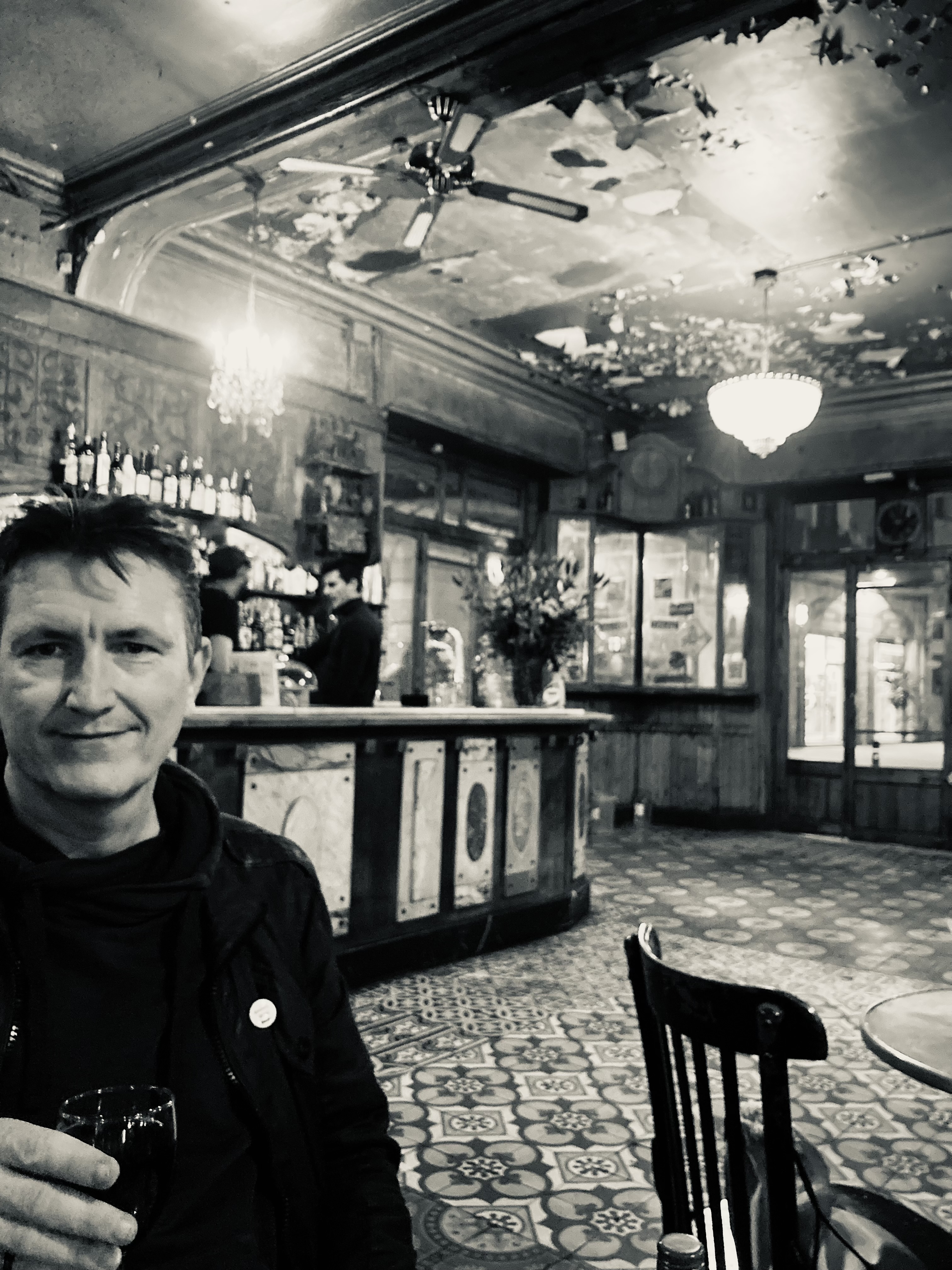
the photo? the significance of the photo? that’s me in a bar in barcelona that hemingway was meant to frequent. it was meant to have changed little since his time. unlike the bar. i think hemingway has changed writing forever.