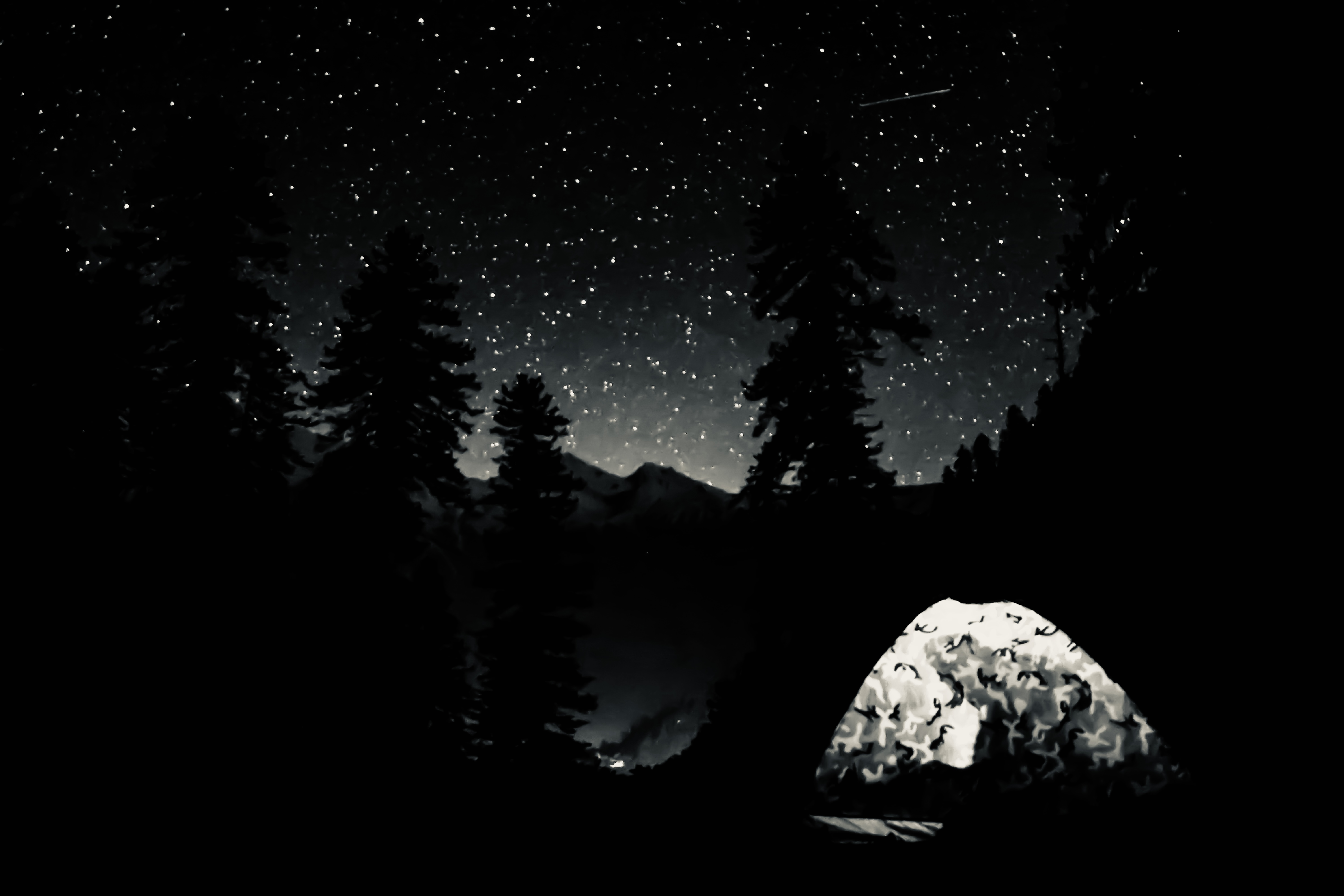
the sky is so dark here. real dark. not like the dark of the city which is like a deep, dark blue. illuminated by the streetlights. the lights of shop windows, offices, apartments. the lights of cars going somewhere, quick and fast. a blur of light up from the city, into the sky, making it dark day. the sky is never black in the city. just the colour of uniform. the stars lost, devoured, consumed by the city life. florescent lights are our wonder now. laser lights across the sky, picking out buildings. no room for shadows. nests are filled with birds with insomnia. tablets on a branch. if only we could sleep. the streetlight flickers. blink on. blink off. blink on. turning backs to the light. but here it is real dark. black of soul dark. reaper cowl dark. even trees become invisible. you have to sense them. sound echoes in its closeness. it touches the ground. spreads. over every blade of grass until all are nothing. a void. a board to be chalked upon. above are shapes i had forgotten. shapes like stars. pinpoints of white in the sky.
finding time to write can be problematic. it can affect getting into a routine. and can make the routine or writing habits you follow. many books advocate writing regularly. some say every day. i have never managed that. being busy with family life. and holding down two other jobs to pay the bills can impact on the time you have available. and by time: i’m not just on about physical time. the time to be free from work. i’m also on about the more important mental time. if you have stressful jobs that are mentally taxing and full on then it takes awhile to achieve quietness. the quietness you need to let your imagination play. explore. dance from thought to thought. place to place. if your’e mentally exhausted this takes longer. first you have to recoup. then gain the quietness. then focus on the writing. so i snatch my quietness. my writing time. it is not regular. or frequent. and due to that. i forget. i forget what i have written before. where i am in my novel. the threads i have set up. i plot but they are brief notes. often single lines for a chapter. a glimpse as to what the chapter may hold. the rest i write on the hoof. by the seat of my pants. this means i break all the rules of writing. i don’t edit after i’ve written a first draft. despite how many writers recommend this. i write a chapter or section. leave it whilst i turn my attention to family and jobs. return to the writing. read that chapter and edit. write the next chapter. i edit and write as i go. i tend to find i don’t do a lot of change. maybe it’s because i ponder a lot what the next chapter is going to be. if i can remember it. think about the characters. the situation i left them in. and i’m a slow typist. that helps. i use just two fingers to type. this has the effect of slowing me down. so by the time i write a sentence or word it has been edited in my head several times. the paragraph shaped. that is why some writers advocate writing by hand. to allow time to think. when i wrote my first novel. it was by hand. and the edits. only at the final stage did i type it up. i still do some writing by pen. my prose-poetry. it is straight from pen to paper then to ipad. a few changes on the way. novels are straight onto ipad. i use Scrivener. i like the corkboard and how it can be used to easily shift things around or generate an outline. the outline proves very useful writing a synopsis for agents, etc. i write my novels sequentially. i don’t hop to a scene if stuck. some writers do that. but i can’t work that way. i need to solve a problem before i move on. not that i have many problems. due to all the time between chapters and typing it down i usually have them ironed out in my head. i also make use of a good writing group. it is local to me and offers invaluable insight on what i’ve written. they will point out if something doesn’t quite work or needs fleshing out more. and it provides a good indicator how a reader might react. do they laugh when you intended? were they surprised by an outcome as you wanted? or was it all guessed too earlier in the story, leaving no surprises? writing groups also give a good incentive to write. you want to make it worthwhile going. to offer something to an audience. to not go empty handed. this keeps you on track. however you write is up to you. you find your own path. despite what some may think. there is no secret formula to writing a novel or getting a book published. it is all out there. you can read loads of books on the subject for suggestions. but ultimately it is down to you. your words. your effort.
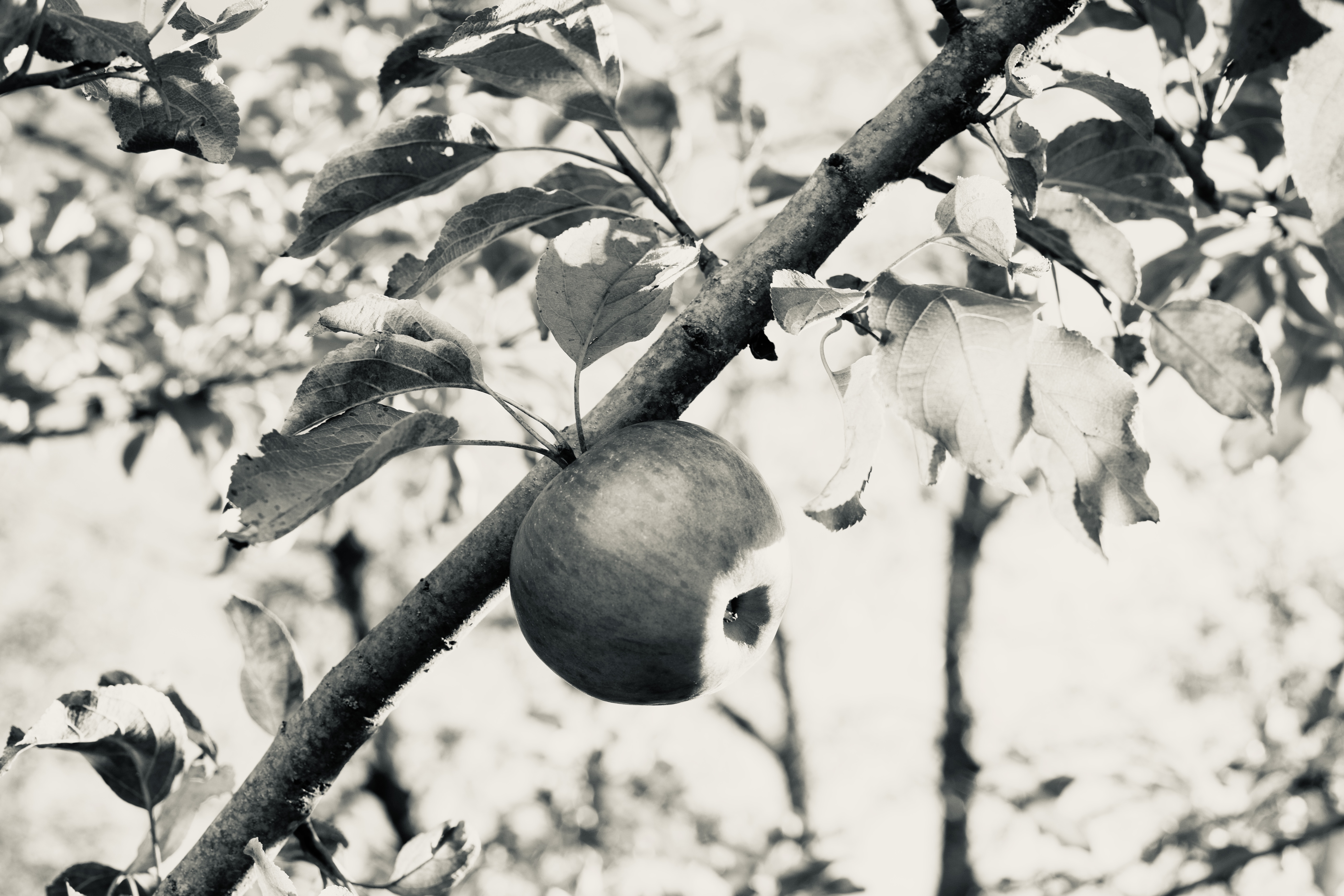
my mother used to warn me as a child: don’t swallow the pips. ‘why?’ i would ask. ‘because a tree will grow inside you.’ but i laughed. it was just one of those things mother said. like: your face will get stuck forever if you pull an ugly face when the wind blows. just a warning to tease kids. a bit of fun. no truth to it. so i would eat my apple. usually a cox’s orange pippin. nice and sweet. juicy. skin. flesh. stalk. core. pips. a tree never grew. no matter how many times i did it. my stomach digested it. the acid inside. the fluids. breaking everything down to nutrients. waste. converting to energy. to be used by the the body. i grew up. became a school kid. primary. secondary. young adult. then onto college. such tales discarded. forgotten. there were more important things. girls. cigarettes. alcohol. music. clothes. i left college with a passable teaching degree and a job in the city. the city. the only city. london. a sprawling mess of towns joined by a tube network. i spent term time focused on my work and career. played the weekends hard. it was my habit to return for a week to my mother’s house in the summer. to that country town. in the heart of somerset. not because i liked it. i loathed it. the town. the people there. the narrow minds. the slow ways. it was an obligation. an obligation that i reduced down over the years to one week in summer. we would sit in the large back garden taking in the sun. sat in rusting garden chairs. cool lemonade to hand. talking about things but not talking. this would last three or four days then i would get restless. the walls of the house and garden confining. suffocating. bearing down with their weight. what was to be said had been said. so i would take off. small pack on my back. four cans of beer. sandwiches. pack of crisps. i would set off down the road. past the tin topped houses. bridge over the river. take a right. follow the road. through the new estate. along the lane then the woods. the edges of quiet. a few dog walkers and children. further still. to the country road. pick a direction. set off and see what i would see. small villages and houses. arches made from over hanging trees across long winding roads. take a swig from a can as i went. a bite of sandwich. enjoying the company of one. the solitude. the silence. on i would go. until the beer ran out. then i would turn. head home. it had been a busy year. ofsted. the sudden departure of the head. stupid bitch shouldn’t have left her password on the computer. my promotion. the reorganisation of the school. the right people in place. my weekends had got wilder to escape the pressure. half-remembered nights followed by waking up in someone’s bed. a bleary-eyed return to my flat. yesterday’s clothes. a shower. a snack. then out to do it all again. so the week away in the summer came as a real break. a break to the pace. the self-destruction. a chance to slow. be still. so we sat. mother and i. in the back garden. sipping lemonade during a particularly hot summer. wasps buzzed around. the air hazy. the soil cracked. grass dry. parched. we talked without talking. then nothing. just the heat. the lemonade. the beat of the sun. one night the sky cracked.lightning bolts. the pound of rain. i sat up. watched. a blessed relief. the bed had been hot. clingy. this brought coolness. a change. tomorrow. i decided. i would go on a walk. i got up early. four cans in the pack. cucumber sandwiches. packet of crisps. and i was off. down the road. past the houses. over the river. take a right. estate. lane. through the woods. into the country. follow a road. i had eaten the sandwiches and crisps a while back. and was on my third can of beer when i entered the village. it was unfamiliar to me. more a hamlet. consisting of a few houses and a pub. the black sheep. i wondered how it had lasted there so long with so few customers. but the country was like that. there was always something without explanation. that you couldn’t understand as city folk. and i now considered myself city folk. like the house at the end of the hamlet. larger than the rest. too large for such a place. with high grey bricked walls surrounding the garden. it made me wonder what it had to hide. to protect. then i saw it. a large apple tree. just poking over the height of the wall. full with large red apples. so many. some were hanging down. almost within reach. i finished the third can. looked up at the apples. my stomach felt empty despite the drink. i needed something. a memory of apple scrumping with school friends came back to me. it never did any harm. just the one. the tree had so many. who would notice? i glanced along the road. no cars. no people. i reached up. finger tips grabbing the end. twisted and pulled. it came away. the branch sprung back. ‘oi!’ came a cry. it was an old man. in green. through a gate. ‘give back that apple.’ but i laughed. feeling eleven again. and ran. the old man trying to catch up. but i was younger. fitter.. ‘you mustn’t’ came the cry as i left him. i glanced behind me. no old man. no hamlet. just the woods ahead. i would drink the last can. then the apple. my treat. the trees towered overhead. sun filtered through the leaves onto the forest floor covered in brown pine needles. the occasional stump. not a sound was heard except the odd branch disturbed by the movement of a bird or something else. i threw the empty can away. turned my attention to my ill-gotten gains. one apple. what a fuss over one apple. when there were so many. so so many. stupid old fool. i bit into its red skin. into its juicy flesh. it was sweet. juice dribbled down my chin. i wanted the all of it. every piece. the stalk. the core. the pips. none must be wasted. it was too good. my apple consumed. i set off further into the woods. past the trees. towering overhead. the rustle of birds. dappled light searching. there was a stab of pain in my stomach. sharp. piercing. stopped me in my tracks. another. sharper. it bent me double. skin clammy. face wet. pains down my legs. into my feet. sharp. cutting. my shoes seemed to press against my feet. shoes too small. tight. my feet hot. burning. i had to get my shoes off. now. i fought the pain in my stomach. untied the laces. shoes off. socks. to see my feet. at first nothing. as i stood bent. just pale pink flesh. toes. nails. a flash of heat. then a change to the skin. darkening. browning. thickening. the nails on my large toes split. divided. fell off. a terrible. my remaining nails popped. then thin. brown tendrils. burst through the skin. like teeth through grapes. brown tendrils twisting to the ground. into it. a few at first. then more. hot burning pain in my feet as roots burst through my heels. then all sides. into the ground. i scream. skin thickening all over. i try to rip my shirt off. but my skin is thickening. tightening. compressing. i find it hard to breathe. i try to gasp for breath. but i can’t breathe. i can’t breathe. hell. i can’t move. i’m stuck here. stuck. a hot burning sensation in my head. like someone stabbing with blades. then the burning stops. and silence. just me. alone. in the woods. unable to move. the silence. a bird overhead. i can just see. a figure. a figure in green. he’s holding something. an axe. he’s holding an axe. ‘they never learn.’ and. i can’t scream.
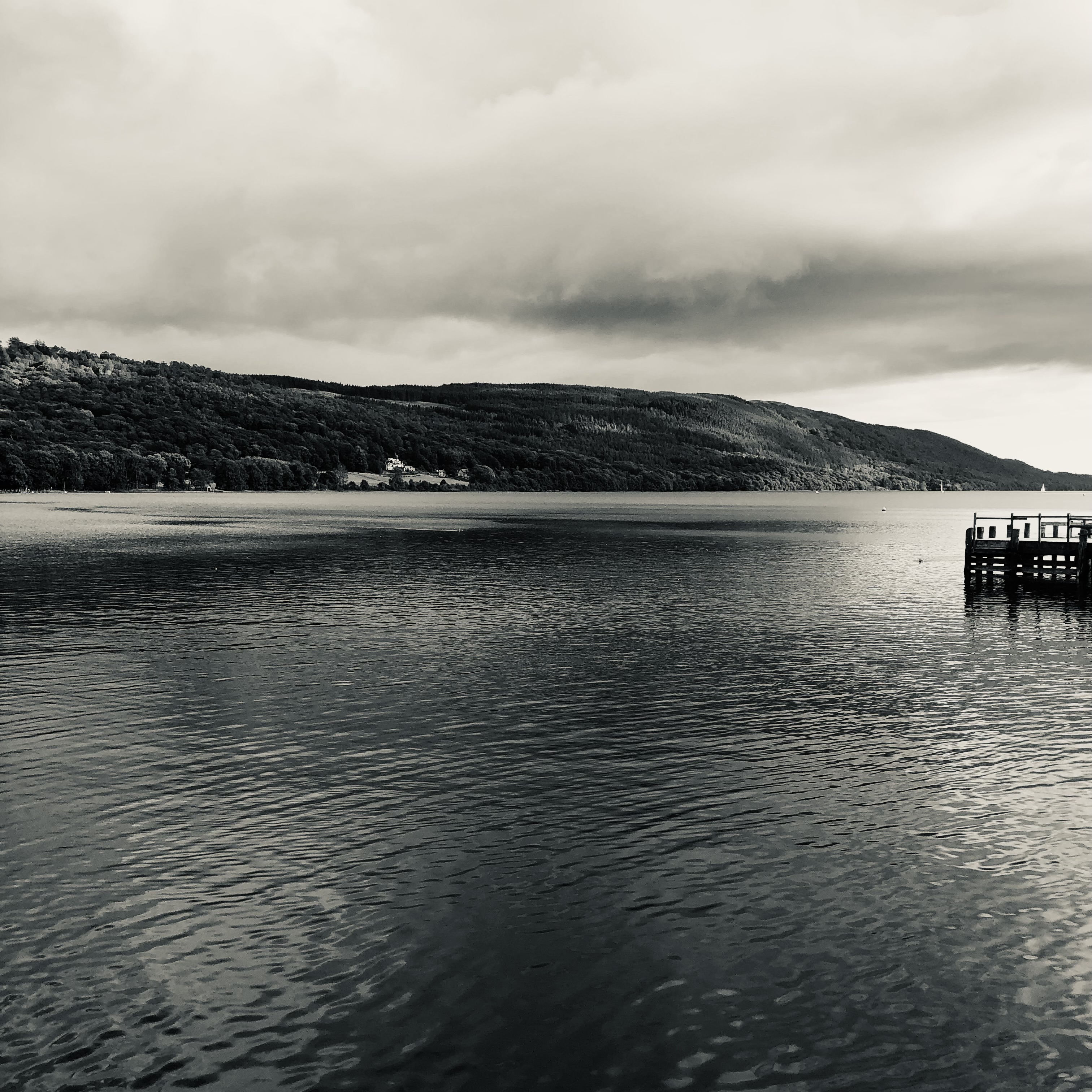
i sit by lake coniston watching the water ripple across the surface surrounded by tree banked hills and the gentle curve of mountains. the sun dances on the water celebrating the day, the break of storms and torrential summer rain. swans glide curious at the commotion but proud to show off their young to any who will give them attention. the launch leaves the jetty, sending great ripples to unnerve the newborn rowers and offering a moments excitement to the many paddle boarders with glaring colours of orange and green. the screams of children splashing and the chatting of adults in the sun. tea cups clink in the bluebird cafe as orders are yelled by the staff. a wave of sound fills the air flattening the moment as smoke rises from campfires away in the woods. what would wordsworth have made of his beloved hills and water? would he have found the time to stop and think, to channel god’s talent and compose? or would the constant din of activity stifle and consume, killing thought in its grasp of sound, a black cloud of storm thunder smothering, drenching the poet, blotting his page, words obliterated as soon as thought of, all consumed by the downpour? what then to history? the writer’s lost to a life dull and obscurity, not the conversation in a white cottage or the delight of a sister, but sad mournful days of what could have been, if only, if only.
mr higgins scooped the last of the insides out into the green plastic bucket. it had been a fruitful year. the display on the wall by the porch looked particularly good this year. sat in a row. images lit up. arresting. just the right note for the season. surely, he would win spookiest house again this year. not that anyone would tell him. folks tended to keep away. since that time. no doubt he would read about his prize in the local paper. get the trophy in the mail. no ceremony for him. satisfied with the result. mr higgins added the harvest to the wall display. placing it on the end. he lit a candle and lowered it inside the hollowed bowl shape. putting the lid on top. the eyes lit up bright like stars. perfect. he went back into the house. into the kitchen. put the kettle on. sat on the old wooden chair. and waited. they would be here soon enough.
they left the house screaming and laughing. he had done it again. can you believe it? tommy strolled at the back. head down. shamefaced. his mother had been right. this night was not for him. he should have listened to her. instead, he had climbed down the ash tree from his bedroom window. blue bag in hand. joined the school kids laughing along the street. going house to house. but he had done it again. they walked along the path next to the house. mrs clarke. they said how she always gave the best sweets. the most. there would be a good haul here. there was a pumpkin on the wall making a fine display of glowing eyes and carved features. the sign that sweets were for the taking here. come in. yuri rang the bell. a big long ring. the door opened. mrs clarke stood there. large bucket of treats in her hand. ‘go mad kids. i have plenty more.’ hands stretched out and grabbed fist fulls. dropped them into their buckets and bags. all except tommy. he stood back. by the gate. too scared to go in. feet rooted at the spot. ‘is that tommy marsden by the gate? come in tommy. grab some.’ tommy stood still. unable to move. hands moist. heart beating. ‘your bag full? ok. never mind.’ the children moved off. mrs clarke shut the door. moment over. michael peered into tommy’s bag. ‘bloody hell, tommy. i can’t believe you did it again.’ he turned to the other kids, yelling: ‘ hey! tommy did it again!’ a laugh went up. cries of ‘he did it again’ turned into ‘scaredy cat! scaredy cat! tommy is a scaredy cat!’ a scream of cackling laughter rose as the group ran off along the path leaving tommy behind. even michael. they didn’t want to be seen with the loser. the pale kid with no sweets in his bag. the boy too scared to go up to the door. what a scaredy cat. tommy walked the street alone. sick yellow light of the street lamps casting shadows. the other children were gone. tommy stood by the path that led up to the old house. big white building, large windows, porch. well-kept garden. rose bushes and tall things. tommy’s knowledge of plants wasn’t good. should he try here or head home? surely, a house this big would give the best sweets? it was worth a try. mustering up his courage, tommy headed up the path. past the neatly trimmed bushes. the stone bird table with a lillipad in the middle. a large tree’s branches hung low over the garden and path. leaves turned oranges, browns, and yellows. as he neared the house he saw the display on the wall. it had to be the best in town. the other kids would regret missing that. a row of twisted faces lit with glowing eyes. some had rows of sharp pointe fangs, razor sharp. others, a single spiked tooth poking up. and some with tombstones in their mouths. the noses were all sorts of shapes, sizes and angles. the expressions on each different. tommy stopped at the steps leading up to the porch. should he ring the bell? he could turn back. the lady at the store had said: only bad people lived in bad places. but his mum said: the lady at the store had bats in her attic. cries of scaredy cat filled his ears. his head. the empty bag felt heavy in his hands. no. he must do it. had to do it. he took the white steps up to the porch slowly. leaned forward. pressed the bell. he could hear footsteps in a corridor approaching. a sort of shuffling walk. fumbling with the door lock. the door moved open. an old man stood before tommy. blue worn slippers. brown chords, faded. white shirt and grey cardigan. grey hair was parted to one on a head which wore thick black-rimmed spectacles. ‘ah. you came. you want sweets?’ tommy’s mouth went dry. hands moist. his mouth opened and closed like a gasping fish. words would not come out. deep breath. he needed a deep breath. count to three. ‘yes. ple..please.’ the man opened the door wide. tommy could see a glass bowl on a table in the hallway. it was full of sweets of every colour. blues, browns, reds, yellows. shimmering foil paper delights. but that wasn’t what caught his eye. there, in the middle, was an enormous mctavish whizzbanger. bigger than he had ever seen. ‘if you want it, just come in and take it. i have plenty more.’ the old man shuffled back from the door. clearing the way. tommy knew he should not enter stranger’s houses. he had been told at school. told by his mother. scaredy cat! scaredy cat! tommy is a scardy cat! if he had that whizzbanger the other kids would no longer call him names. they wouldn’t laugh. they would gather round amazed. jealous. he would be talked of as special. a hero. they would follow him. they would follow to the land of sweets. tommy stepped in. past the old man. up to the bowl. there was only one thing he wanted. he put his hand in the bowl. grasped the whizzbanger. the door clicked behind him.
mr higgins scooped the last of the insides out into the bucket. what a great expression he caught. it would certainly catch someone’s eye. he climbed up onto the wooden kitchen chair. reached high to the top of the welsh dresser to fetch down the orange paint. it had been another fruitful year. the display on the wall by the porch would look even better next year. sat in a row. images lit up for all to see. arresting. just the right note for the season. surely, he would win spookiest house again.
lately i’ve been suffering a bout of imposter syndrome. when i work as a bookseller i rarely, if at all, mention i write. instead it remains a subject pushed to the back. hidden away. securely. in a box. wrapped in chains. big large lock. the key secreted away. i feel the dark bird of the imposter resting in the shadows. hovering on my shoulder. i can’t call myself a real writer. i’m merely self-published.
ok. it doesn’t mean i feel that self-published writing has less quality controls. many employ editors to analyse their work. typesetters to arrange the pages. designers for the covers. great expense is invested in their work. to achieve the goal of a finished book. and often the writing is great. brilliantly put together. they just weren’t chosen by the gatekeepers. and those gatekeepers are not infallible. the great publishing house make mistakes. who hasn’t tutted at a traditionally published book with errors in the text or a glaring plot hole?
yet still the dark bird hovers. i was no it chosen to be amongst the traditionally published. certain websites and organisations shun the self-published. only the traditionally published will do. it does not matter to them or me how many hundreds of books i’ve sold. i was not chosen. i am the harry to the william. no great reward awaits me.
i often think when edgar allen poe wrote of a raven he was having a particularly bad bout of imposter syndrome. it was there at his door. clawing to get in. to dig the talons in. so i remain silent on my writing. mention it not to the traditionally published. my dirty secret. instead i keep it hidden. only revealing it to my writing group or spoken word events. then i hurry away. pages destroyed. the shame hidden.
rumble strewn ground. sounds of mortar in the distance. shells stood where homes once were. the carcass of a tank stood in the road surrounded by the fallen. blood patterns on brick and littered bones. he hid behind a wall that once was a building. weren’t they meant to be winning? he remembered the time they had landed. the embrace of the sea. what a sea! he had never seen such blue. the sound of sand beneath boots. the arc of birds across a clear sky. they had marched through green. small villages with friendly locals. an offer of wine and a pat on the back. an easy time. they marched on. over poppy fields, polka dotted landscapes. bees led the way. then the sky darkened. rain began to fall. the sound of distant guns. experience told him they were close. they had entered foolishly. too in the open. he took the route behind rubble, close to the walls. he was no fool. the young fell. first to go was Ajay. three shots to the head and gone. he had liked him. but in war attachments were deadly. better to look after the self. the weapons lay beyond reach. next, was Will running for the tank. he had cried a warning but too late. landmined. a cloud of blood and bone. next Jacob, the leader, taking the high point in a tower with sniper rifle. but they were ready. a trip wire saw to him. so now all alone. crouching behind a wall. bullets hit brick nearby but not there. perhaps it was safe to look. just a second. he got himself ready. moved cautiously and peered around the corner. a crack of a gun. the last thing he saw were the words Squad Killed.
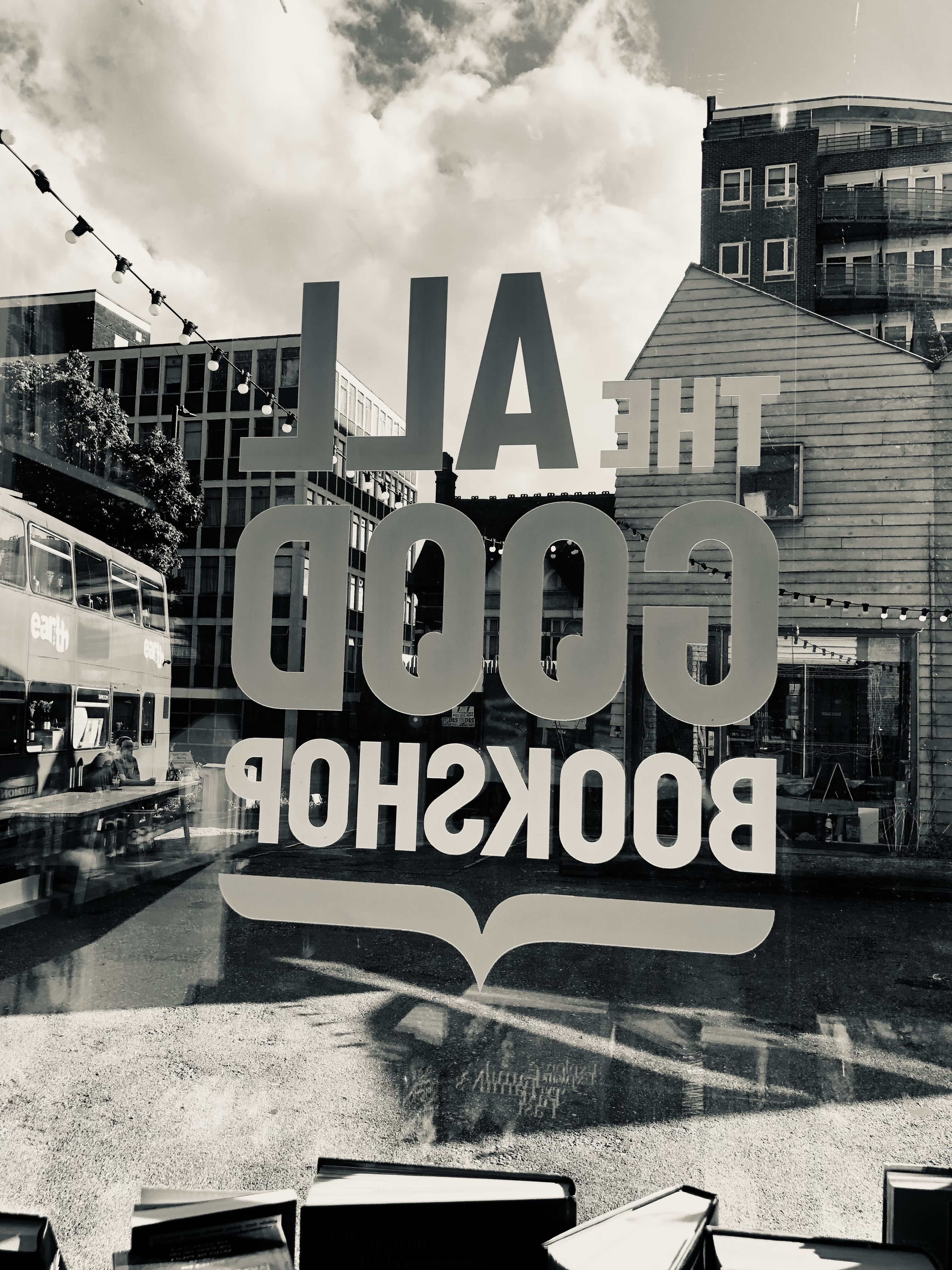
so i am sat here in a courtyard surrounded by boutique shops and a bus that is a bar. i come here to escape the distractions of day time TV or the internet, the endless ramblings of social media. i sit sometimes in the yard on an unsteady bench or on other days in the 2nd hand bookshop, writing in my small black moleskine notebook with a drink to hand. usually, i am left alone to ponder, imagine and daydream before a customer comes into the bookshop to interrupt and peck at my quietness. but it is a bookshop. so we are often in our own worlds, them in an endless list of book titles seeking to hook, me in a sentence, a moment, searching for a word that stays just out of reach. the courtyard was not always such a pleasant place. once it was an unloved carpark full of lost promise and refuse. now, it is a place of creativity and creation. ideas blossom until the yard is full of flowers waiting to be picked.
old men with ghosts in their eyes sit sipping the first of the day. lost friends and family float in the air as carcasses chew on a roasted nut. they remember happier laughter when mates were plenty and pints 50p. now the laughter is full of bitter tears that fall on froth making sad eyes. No Name sits in his usual seat pouring down blackcurrant soda. he looks enviously at the amber glasses. no longer. doctor’s orders. Racist Phil peers angrily over his drink at the diverse staff then takes a sip of his barcadi and coke. they always smile politely. a lone lady with ruddy face and dye streaked silver hair takes a dash of wine then places a beer mat carefully over the rim. she waits for Harold. what’s keeping him? it’s his round. over cooked sausages, too crisp bacon, and soggy hash browns are presented to customers as a culinary delight. even the watered sauce wants to steer clear. businessmen too tight for Costas sit drinking free refill coffee while loudly demanding attention on their mobile phones. charge points are plenty but none are free. the dregs of the morning hang on as the lunchtime crowd are drawn in by special thursday curry with drink. laughter flies up as banter is machine gunned across tables and mobiles are compared. have you seen this photo? are they real? they can’t be. a lost family wanders in search of convenience. a grubby white high chair is offered like a fallen throne and gratefully accepted. a quick wipe down and it’ll be all right. a fruitshoot and chips for the kids, salad and spritzers for the mums. aren’t we being decadent. what would Michael say? thank heavens for colouring sheets and crayons. No Name orders a blackcurrant and starts the sun crossword. the lone lady, cursing Harold, drinks another wine. peppered curry arrives with lone poppadom and too sweet mango chutney. somewhere a cook cries in his grave. the rush comes to an end and the hearty remain. long gone the businessmen and mums – children to collect. Lone lady gives up, sinks her wine and asks for a taxi. she never has a phone. the writer smile’s at the content, sips his beer.
writing is hard. and life gets in the way. i had the day planned. a few household chores. iron a few items for work. clear the table. write. re-write the chapter i’ve been failing to write for two months. but then life sends a curve ball. your path gets skewed. the odd jobs take longer. your mind won’t settle. won’t clear. too focused on the tomorrow. too focused on the before. no space for the now. you become exhausted by it all. the pressure on the self. mind blocks. you are prevented from getting into the creative zone. the point where your mind wanders, creates, imagines. plays games. instead you are stuck in reality. concrete grey blocks surround you. blind your vision. a single tone of grey.
anyway. it’s been one of those days. i got no writing done.







 SLAMFitzsimons