spurts

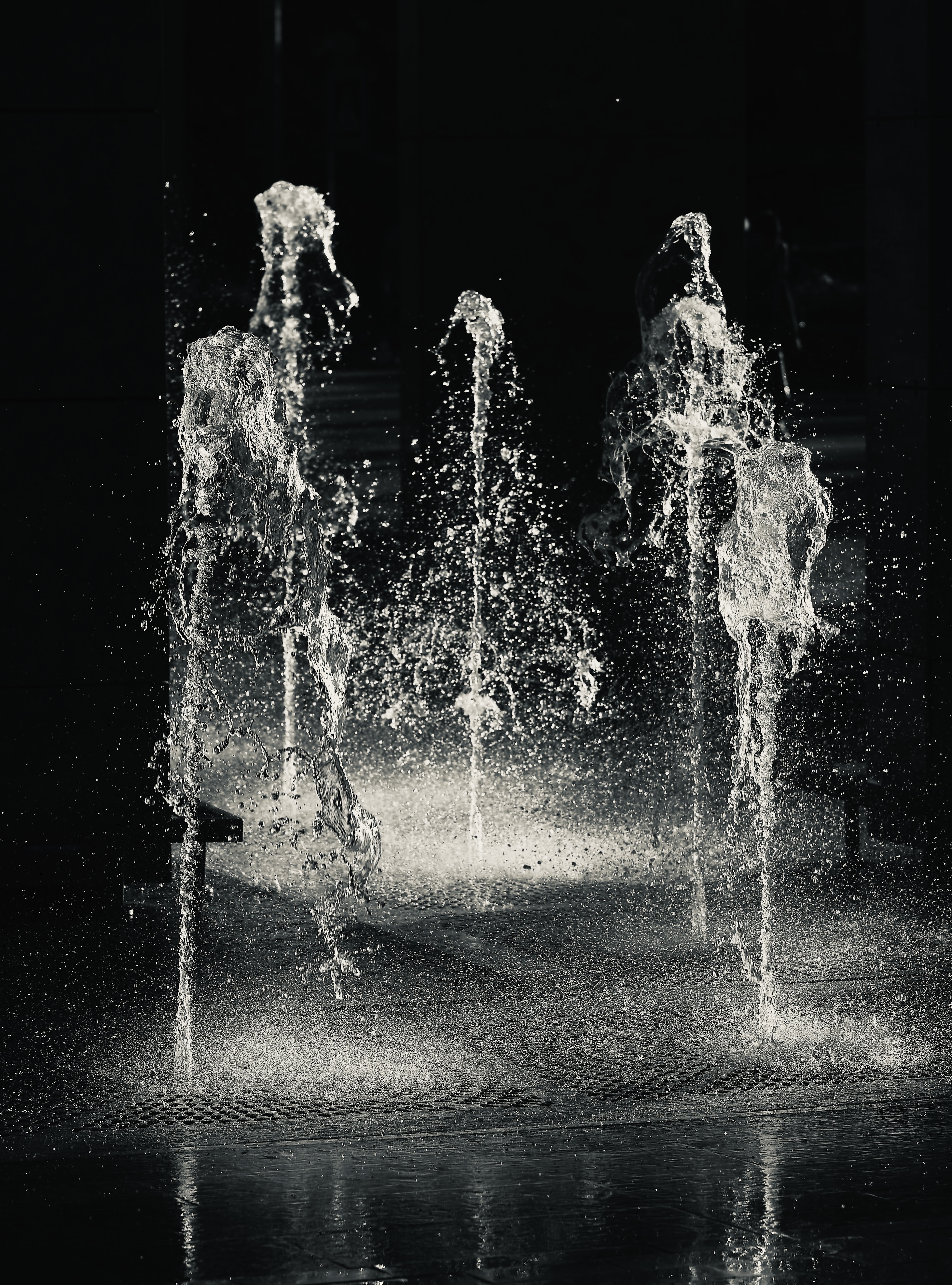
fountains spurting water upwards

when i got back into writing seventeen years ago i would sit at a desk in the attic room and open a large a4 book of paper and with a pencil begin to scribe. i would write continuously until i got to the end of the chapter. i would write a chapter a night of my book in 4h pencil and when done close the book to the next day. this technique worked well for the first two books.

the next two books my technique evolved. i was writing longer chapters so i would write until there was a natural break and my energy was spent. until words and ideas failed me and i knew i needed to think about where the characters and plot were going next.

the next book i planned. i mapped it out loosely across pages. i knew where each chapter was going and where the characters would end by the close of the story. if they survived. so i wrote complete chapters again. yet the writing got harder. less frequent. the pauses between when i would write grew. i found it difficult to get going. i knew i needed a different approach.

someone told me about the pomodoro technique. where you work for twenty-five minutes. take a five minute break. repeat this three more times but after the fourth work stint take a longer fifteen to thirty minute break. the idea was you would stay focused and work in intensive bursts. it didn’t work with me. i still had the problem of facing a new chapter or section and not knowing how to get started. what to write next. sometimes the not knowing would last months and i would instead turn to writing a short story or prose-poem.

later i heard about another approach. it may have been in a book about writing or about a particular writer’s life or even been a discussion point at the writing group i attend. whatever way i heard it i decided to give it a go and it worked for me. instead of writing chapters or stopping at natural breaks i sit down to write for a specific time. usually two hours. and i would take pen in hand and write in my notebook non-stop during that time. taking an odd pause to take a sip of drink or stretch my back. but primarily i would write for two hours and stop at the end of a sentence in the middle of a scene or a thought or an idea. the important bit: while the energy was still there. while i was still buzzing with ideas and enthusiasm for what i was writing and wanted to write the next sentence. i would write in an energetic frenzy two hour spurt then suddenly stop. stop with things yet to be said. why? so that next time i will have something to say. a point to continue on from and get back into the writing. so i’m not starting from a dead stop. i never end at a chapter end. if the two hour spurt is at the end of the chapter i will write five or six lines of the next chapter or section.

i have modified this approach slightly. i now reread the last section of the previous spurts writing before beginning the new writing session. just to familiarise myself with where i got to. this is necessary for me as it can sometimes be two weeks before i pick up my pen again. if a chapter or section gets completed across spurts i will type it up. i live in dread of losing my notebook and my work. of leaving it somewhere or it being consumed in fire. so i type up the latest section when complete so i have a back up.

i know this approach will not work for every writer. i am not saying that. it is the way that works for me. it has taken me seventeen years to find a way that works for me. it will take time for you to find your own approach. you can only find out by writing. sitting down and trying different approaches. even now i find this method only works for my novel writing. short stories i just have to sit down and write them to the end in one sitting. same with prose-poems. but for novels. the longer form. the two hour spurts from an energised start is where i go.

writer’s time

Man in gray suit and brown hat sitting on brown wooden bench

when you are at school as a child they teach you that there are sixty seconds in a minute and sixty minutes in an hour and twenty-four hours in the day. but experience soon dawns on you that the teacher lied. you sit in class doing an exercise in your book waiting for the hands on the clock to move around and say it is home time. but no matter how much you will it. pray for it. it doesn’t happen. and you realise in that moment that in fact time has slowed down to a crawl. it is barely moving. it is working to thwart your plans.

and then on those rare days when your parents are not too busy and take you somewhere. a trip to the beach perhaps. you are loving the experience. building sandcastles. paddling in the waves. eating an ice-cream. but before you know. seemingly within seconds. it is announced you have to return to the car and head home. how had time moved so quickly then? why had it sped up to spoil your fun.

the same happens over longer periods. growing up as a teen you never seem to be getting old enough to do the things you want to do. you are always being told you are too young and have to wait. time seems to drag before those restrictions are lifted and you are free.

but when you are older the years whizz by. you were in your thirties then you are nearly a pensioner. a senior citizen. who took those years? where did they go? how did you get to be old?

the same tricks of time can happen when writing. you can be sat at home or in a pub or cafe faced with an empty page. first time moves slowly as you try to formulate ideas and not be distracted by the arsehole talking loudly on their mobile phone or the toddler who has decided to run up and down the length of the room being a plane whilst ignored by their parents. you knuckle down. get a few words on the page. then after a third of a page you hit your stride. the words are flowing. your mind has taken you out of the room to the writers’ place. the realm of thought and imagination combined with the physicality of putting words on the page. you are lost to that world. page after page is filled. you come to a natural pause. you look up at the clock. you wonder why it is now dark outside and how it got so late. a mere moment was in fact hours.

so if you want to beat time. use it to your advantage. take up writing. it transforms the ticking of the hands. it allows you to time travel. go from place to place. be in a room but not in a room. dissolve to nothingness. in your corner of the room.

raven

lately i’ve been suffering a bout of imposter syndrome. when i work as a bookseller i rarely, if at all, mention i write. instead it remains a subject pushed to the back. hidden away. securely. in a box. wrapped in chains. big large lock. the key secreted away. i feel the dark bird of the imposter resting in the shadows. hovering on my shoulder. i can’t call myself a real writer. i’m merely self-published.

ok. it doesn’t mean i feel that self-published writing has less quality controls. many employ editors to analyse their work. typesetters to arrange the pages. designers for the covers. great expense is invested in their work. to achieve the goal of a finished book. and often the writing is great. brilliantly put together. they just weren’t chosen by the gatekeepers. and those gatekeepers are not infallible. the great publishing house make mistakes. who hasn’t tutted at a traditionally published book with errors in the text or a glaring plot hole?

yet still the dark bird hovers. i was no it chosen to be amongst the traditionally published. certain websites and organisations shun the self-published. only the traditionally published will do. it does not matter to them or me how many hundreds of books i’ve sold. i was not chosen. i am the harry to the william. no great reward awaits me.

i often think when edgar allen poe wrote of a raven he was having a particularly bad bout of imposter syndrome. it was there at his door. clawing to get in. to dig the talons in. so i remain silent on my writing. mention it not to the traditionally published. my dirty secret. instead i keep it hidden. only revealing it to my writing group or spoken word events. then i hurry away. pages destroyed. the shame hidden.

2022 and all that

Well, 2022 brought a number of changes which impacted on what I write here. I have been submitting a new novel for consideration. But primarily, I have been writing a lot of prose-poetry. This has led me to the new outlet for my writing of Spoken Word.

What is Spoken Word?

Spoken word is when you perform any piece of writing to a group of people. It is often poetry but can be a story, monologue, or something else. It is quite flexible as to format.

Due to writing a lot of prose-poetry and sharing at my favourite writing group, I was encouraged to attend a Spoken Word night. I went along, sat, watched, then thought: I want to set up one of those. And where better than my favourite bookshop in my local area. So far they have been going well and I have been exposed to some great fresh writing that excites me and always leaves me thinking. Such a variety is on offer. All unique voices that should be heard.

Children love Spoken Word and enjoy writing poetry so it is a great thing to do for World Book Week. Why not start by enjoying watching some Michael Rosen, Benjamin Zephaniah, John Hegley, Kate Tempest, or Anthony Joseph?

As well as Spoken Word, I have been plotting and writing another one. I have changed my approach and audience for it. I’m venturing somewhere new. It is challenging and exciting. I’m trying to apply some of the approaches I use for my prose-poetry to the novel writing. I’m not sure it will work. Only time can tell.

What have you been doing?

Wild Words Festival 2022

So Friday 3rd to Sunday 5th June is the Wild Words Festival in Cuffley, Hertforshire. I am on stage Friday at 4:30pm and I must say I am really looking forward to it.

I have been sifting through my children’s poems to find daft ones, silly ones, disgusting ones to share to warm the audience up before we get onto the serious business of wishes.

Wishes are so important to stories. Without them many things would not happen. Events would not take place and characters would not be motivated to do something. Of course, the problem with making a wish is that usually something goes wrong as Billy found out Wishbone Billy.

If you can make the festival, do say high and do let me know what you thought of my books if you bought them. I always love to find out from children what they think. If you can’t make the Wish Wonder you will probably find me hanging out in the festival’s bookshop buying more books when I really shouldn’t. I have so many to read already!

Anyway, whatever you are doing over the weekend don’t forget to take time to find a quiet space and make a wish. Maybe just a small one. You never know who might be listening.

Moment

There is that sweet moment of the day when silence seems to descend and time holds still and even the bustle of a packed café remains unnoticed as you let your mind wander, take a turn down a path, untrodden, overgrown with branches forming a canopy of green, and as you wander you begin to notice the magical figures that flitter between the leaves, darting from flower to flower to add a sparkle of colour, and just ahead you glimpse a white steed, a unicorn, drinking from a brook as an elf plays a lullaby on a panpipe, an it is at these moments you paint a scene, craft a character and place them, give them words to say and a task to do, a quest to strive after, to reach for like the words you seek to place on a page, a phrase of imagination, and then you pause for a moment, look around, and realise where you are, in that café, surrounded by people.

This came about when wondering what to write. It had been a while since I wrote something new as I had been spending my time editing a book of mine ready for submission so the creative muscle was rusty. And whilst sat there in the open with a coffee nearby, it reminded me of all those times when time stood still as I wrote, how it could take you places and how a good piece of writing could also take its reader places. So I wrote about that moment.