doppelganger

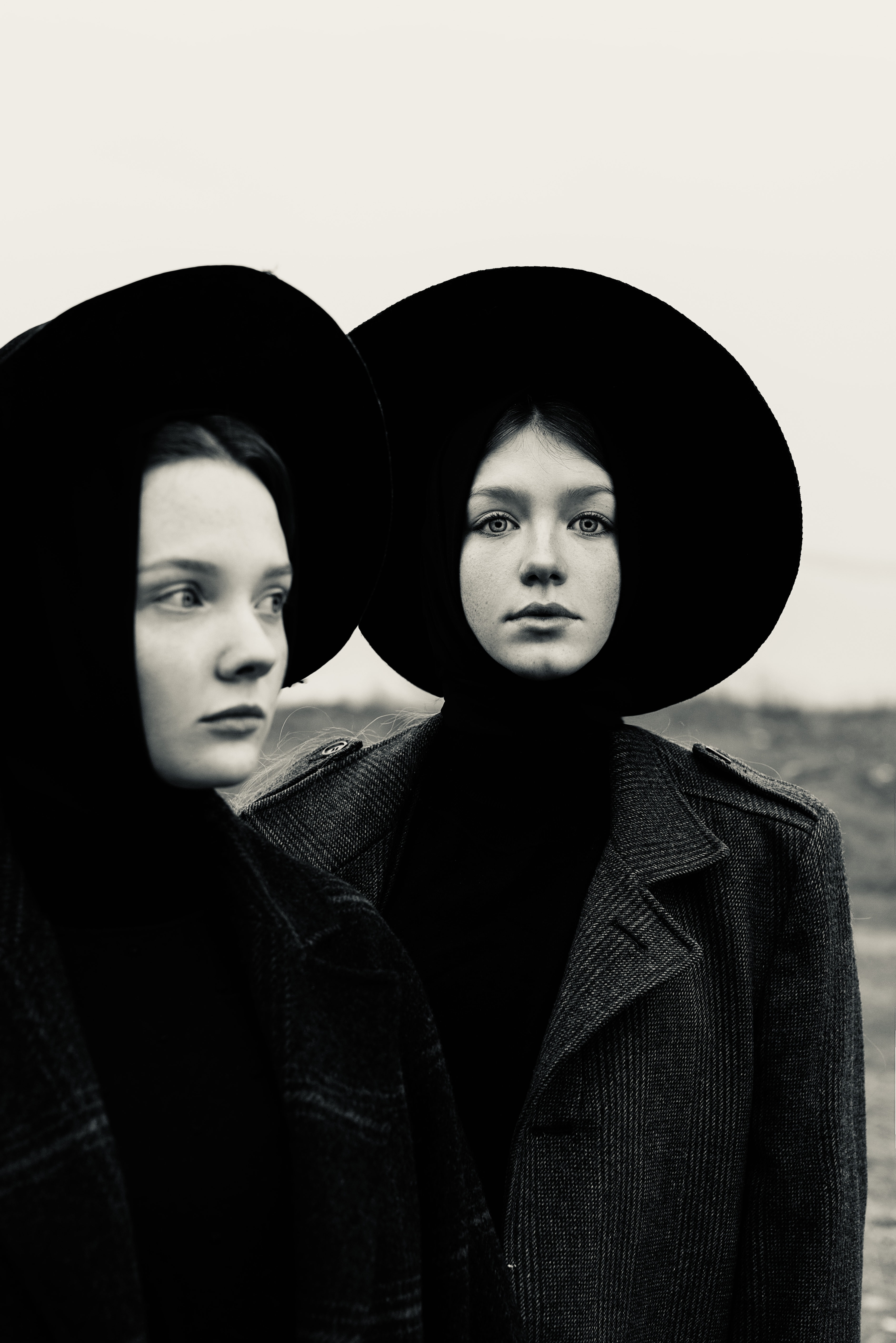
Minimalist portraiture women outdoors

Margaret Atwood in her book ‘On Writers and Writing’ talks of authors living in a life of split-personality. Like Dr Jekyll and Mr Hyde we exist with a darker self, our writer’s voice or being. Whilst we live good wholesome lives earning a crust to support our writing identity and enable us to do the thing we love, when faced with a blank page and a typewriter we turn dark. We will happily murder a character that our poor readers have grown to respect and love. We will with joy bestow upon a poor child a life of misery in the harshest of conditions with no seemingly way to exist the torment. We will bring death to the door of a beloved pet. All for the story. Always to the unseen god of story.

It is no wonder then that some readers when faced with the writer in front of them may confuse the voice of the book, the one they had previously trusted until the heroine died horribly in a fire, is the same as the voice of the writer. That both hold the same sentimentalities and beliefs. That both are not indistinguishable from the other. After all, are not writers told to ‘write what you know?’ What more evidence is needed then that the writer is capable of these hideous offensives?

Yet, when writing the writer often detaches themselves from their character and world. Yes, there may be elements of their psyche that influences the path of the story. But the story is a being onto itself. The characters make demands. Choose their own paths. You may hope a character will do certain actions but the god of story may demand otherwise. And who is brave enough to oppose the god of story? Those who do sacrifice their existence.

words

White paper on black background

i’ve always had a problem with words. not the deciding on them. not the thinking of them. the focusing on the words to use. the need to reach for a thesaurus because they just won’t come. not that problem. the word count. that’s the issue. no matter how big an idea or how many chapters i seem to always get a low word count.

i plan out my writing. brief lines with a few details what will happen in each chapter. then i begin and write. i sit down at my keyboard and tap away. the idea clear in my mind. full knowledge of the setting and what the character has to achieve in that chapter. i write the scene. describe the setting, add the action and dialogue. build it up as slow as i can. chapter finished. 1500-2000 words. where’s the rest of it? surely i can write longer?

being a two finger typist, i think: maybe its the typing. maybe i should revert back to the old pen and paper. ditch the modern technology. unhamper myself. free myself to write without the distractions a machine brings. but it’s no good. still the same length of chapter. 1500-2000 words. still the problem that the novel is just not long enough for publishers.

perhaps it goes back to me. i’ve never been one to talk lots. always one to listen. speak when i have something to say. something to share. my shaggy dog stories peter out. the dog dies before it gets to the end of the tale. conciseness is in my nature. why use 300 words when a sentence will do? there are some who can talk. really talk. add lots of detail and atmosphere. and write that way. but my thinking has always been why mention the table is red if the colour isn’t important? only mention the details that are important to the plot and events. cut back the chaff.

perhaps my whole approach is wrong. maybe i need to let forth with a wave of unnecessary words. use 100 when 10 would do. but it goes against my grain. perhaps, as i suspect, it is the demanded word counts are wrong that a novel should be the length it should be. should the ‘great gatsby’ be made longer because it doesn’t meet acceptable word counts? max porter’s work lengthened to an epic? or do the publishers need to be more flexible in their approach? is it time for change? perhaps selfish i know. me calling for a revolution just to suit how i write. but think of all the great writing lost because it didn’t meet a required format (i don’t include myself in this).

words. when are many too many? few too few?

a psychogeography of turnpike lane

in the summer of 2023, during the haringey arts festival, i got involved with a writing project. the idea was to map the psychological reaction to local area in turnpike lane, london through pieces of poetry and prose. we spent an afternoon exploring and writing about the local area.

writers ventured out. made notes. then sat and scribbled a piece or pieces of writing. what resulted was a collection of work that spoke of different roads, shops, buildings, or journeys.

after some editing and compiling by clever people, a book was born. some abstract illustrations were added to accompany the work, and a year late the book was launched in london.

i attended a launch in the all good bookshop which is right in the heart of turnpike lane. extracts were read, discussion took place, plans were made, and whiskey dunk.

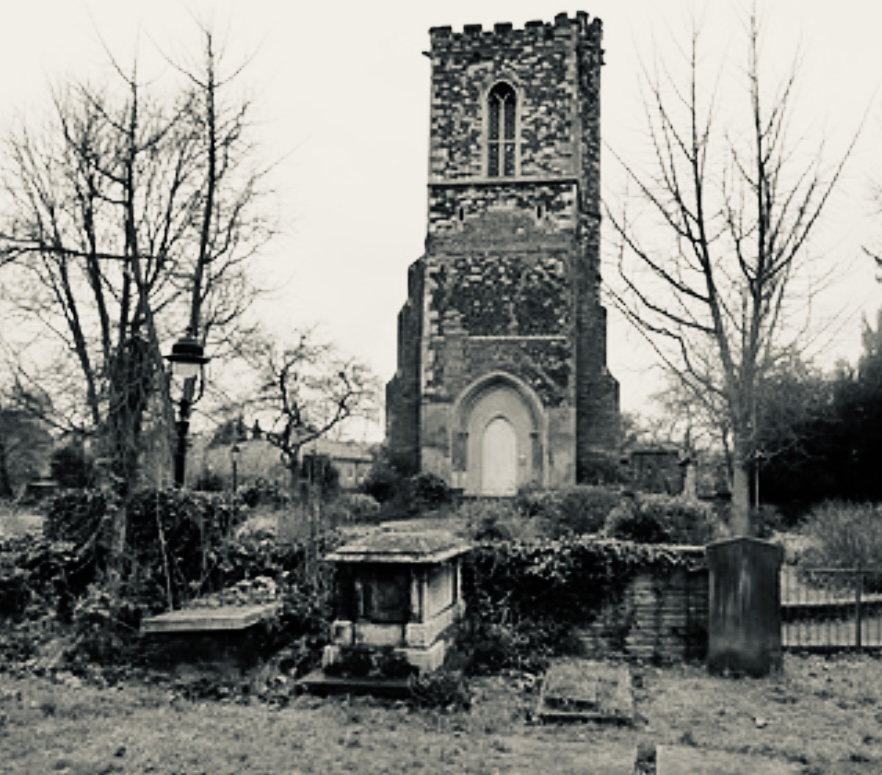
friday 20th september sees us at the magnificent st mary’s tower in hornsey to promote the book. it promises to an atmospheric evening of celebration, laughter, and possibly intrigue.

hemingway

i first came across hemingway when doing a course on writing at citylit, london. if you don’t know citylit, it’s an adult learning college locate near holborn tube. that big long road that winds it way down pass theatres and hotels to waterloo bridge and the south bank. citylit runs many creative courses and i heard good things about its writing courses and heard they were doable if on a budget. i’m always on a budget.

the courses are often taught by stabilised writers. this one was taught by scott bradfield. we were often set things to read. and he set us the short story ‘hills like white elephants’ to read. i read it. read it again. it was like a revelation to me. here was a writer cutting out loads of description, reams of adjectives and adverbs, to pare back the story to its essence. the writing was like a fresh of air. a chill winter wind that wakes you from a night of over indulgence. it was like hemingway was giving me permission to do something. something i had long thought.

i had studied literature as part of my ba. a diet of hardy, dh lawrence, and george eliot (oh god, george eliot). they loved their long winding descriptions where a hundred words were better than five. long rolling descriptions of the scenery. adjective upon adjective that wound their way across the pages before a character did something. followed by exposition. how they loved exposition.

i followed this by teaching primary and mainly reading children’s literature. children’s literature loved an adverb and adjective. not forgetting a liberal use of simile and as many words for ‘said’ you could think of. so did the national curriculum. this is what they decided good writing consisted of. no hemingway style for them. you had to use lots of adverbs and adjectives to tick the boxes. not forgetting the whole range of punctuation.

it is not surprising then that this is what i thought writing was. had to be. i had been fed a diet of word types. all the word types. used liberally and often. yet i was not satisfied. why did we have to mention all the senses? in every description? surely, you should focus on the important ones for that scene? and did we really need long passages of description to describe a setting whilst the character was left in limbo? doing nothing. waiting for us to finish. my thinking was we should treat the setting as a character. and f important to the plot. then we spent time on it. but if passing through. was there a need? i began to have doubts over the way writing was taught and the way i wrote.

so reading hemingway gave me approval of my ideas. to leave the adverbs behind. use adjectives sparingly. use five words instead of a hundred. cut writing to the bone. to the essential. to what i considered important. gone were adverbs. i went further. reducing articles. conjunctives. pairing back the range of punctuation. the length of a sentence. reducing the sentence to its minimum. to the minimal point at which it could still be understood.

my prose-poetry is a concentrated version of that. my short stories and the novel i’m working on. less so. grammarly would have a system failure reading those. and i continue to experiment. wonder how further i should push it. the results are here on this website. see what you think.

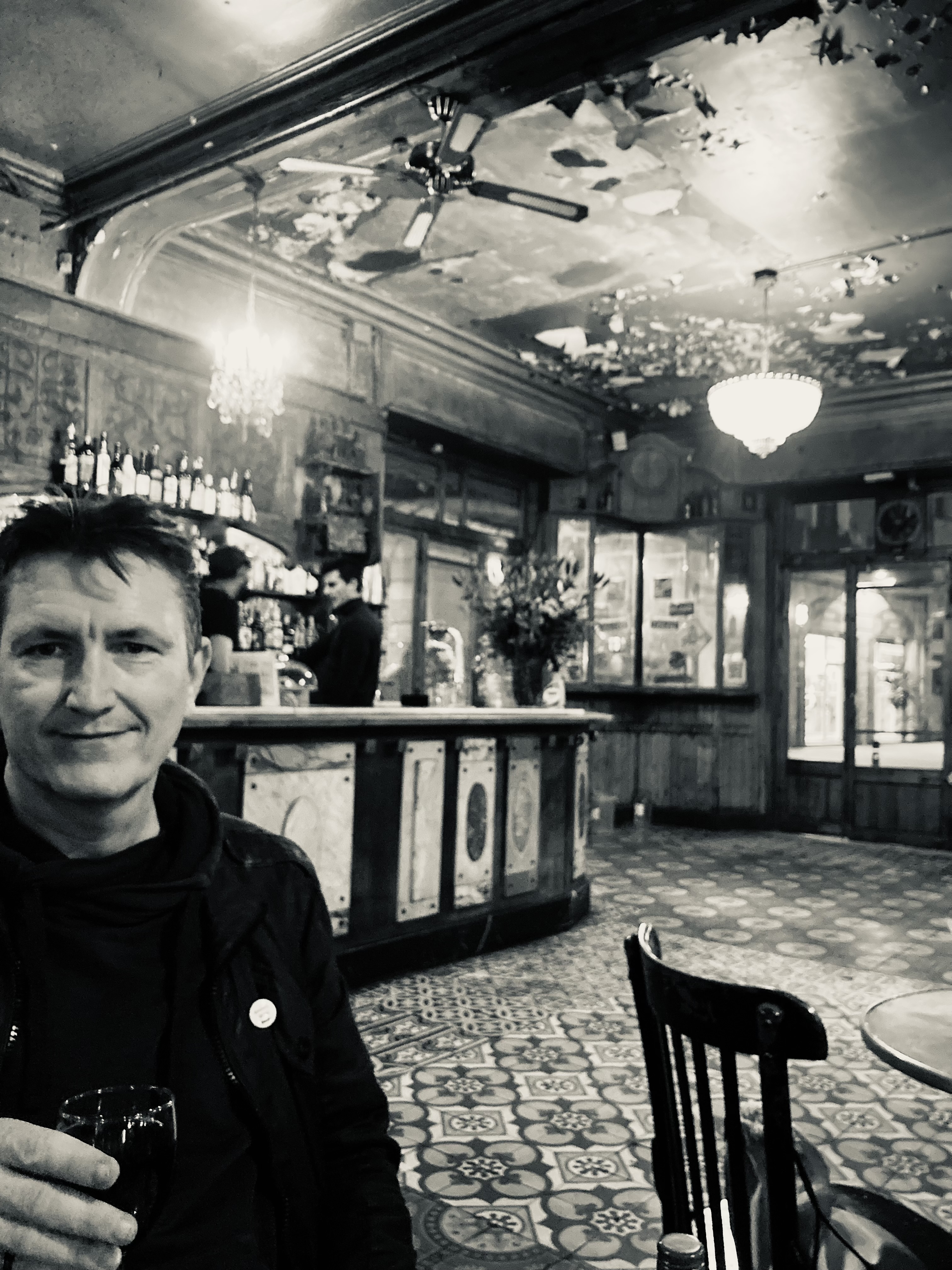
the photo? the significance of the photo? that’s me in a bar in barcelona that hemingway was meant to frequent. it was meant to have changed little since his time. unlike the bar. i think hemingway has changed writing forever.

apple

my mother used to warn me as a child: don’t swallow the pips.
 ‘why?’ i would ask.
 ‘because a tree will grow inside you.’
 but i laughed. it was just one of those things mother said. like: your face will get stuck forever if you pull an ugly face when the wind blows. just a warning to tease kids. a bit of fun. no truth to it. so i would eat my apple. usually a cox’s orange pippin. nice and sweet. juicy.
 skin.
 flesh.
 stalk.
 core.
 pips.
 a tree never grew. no matter how many times i did it. my stomach digested it. the acid inside. the fluids. breaking everything down to nutrients. waste. converting to energy. to be used by the the body.
 i grew up. became a school kid. primary. secondary. young adult. then onto college. such tales discarded. forgotten. there were more important things. girls. cigarettes. alcohol. music. clothes.
i left college with a passable teaching degree and a job in the city. the city. the only city. london. a sprawling mess of towns joined by a tube network. i spent term time focused on my work and career. played the weekends hard.
 it was my habit to return for a week to my mother’s house in the summer. to that country town. in the heart of somerset. not because i liked it. i loathed it. the town. the people there. the narrow minds. the slow ways. it was an obligation. an obligation that i reduced down over the years to one week in summer.
we would sit in the large back garden taking in the sun. sat in rusting garden chairs. cool lemonade to hand. talking about things but not talking. this would last three or four days then i would get restless. the walls of the house and garden confining. suffocating. bearing down with their weight. what was to be said had been said. so i would take off. small pack on my back. four cans of beer. sandwiches. pack of crisps.
 i would set off down the road. past the tin topped houses. bridge over the river. take a right. follow the road. through the new estate. along the lane then the woods. the edges of quiet. a few dog walkers and children. further still. to the country road. pick a direction. set off and see what i would see. small villages and houses. arches made from over hanging trees across long winding roads. take a swig from a can as i went. a bite of sandwich. enjoying the company of one. the solitude. the silence. on i would go. until the beer ran out. then i would turn. head home.
 it had been a busy year. ofsted. the sudden departure of the head. stupid bitch shouldn’t have left her password on the computer. my promotion. the reorganisation of the school. the right people in place. my weekends had got wilder to escape the pressure. half-remembered nights followed by waking up in someone’s bed. a bleary-eyed return to my flat. yesterday’s clothes. a shower. a snack. then out to do it all again.
 so the week away in the summer came as a real break. a break to the pace. the self-destruction. a chance to slow. be still. so we sat. mother and i. in the back garden. sipping lemonade during a particularly hot summer. wasps buzzed around. the air hazy. the soil cracked. grass dry. parched. we talked without talking. then nothing. just the heat. the lemonade. the beat of the sun.
 one night the sky cracked.lightning bolts. the pound of rain. i sat up. watched. a blessed relief. the bed had been hot. clingy. this brought coolness. a change. tomorrow. i decided. i would go on a walk.
i got up early. four cans in the pack. cucumber sandwiches. packet of crisps. and i was off. down the road. past the houses. over the river. take a right. estate. lane. through the woods. into the country. follow a road.
 i had eaten the sandwiches and crisps a while back. and was on my third can of beer when i entered the village. it was unfamiliar to me. more a hamlet. consisting of a few houses and a pub. the black sheep. i wondered how it had lasted there so long with so few customers. but the country was like that. there was always something without explanation. that you couldn’t understand as city folk. and i now considered myself city folk.
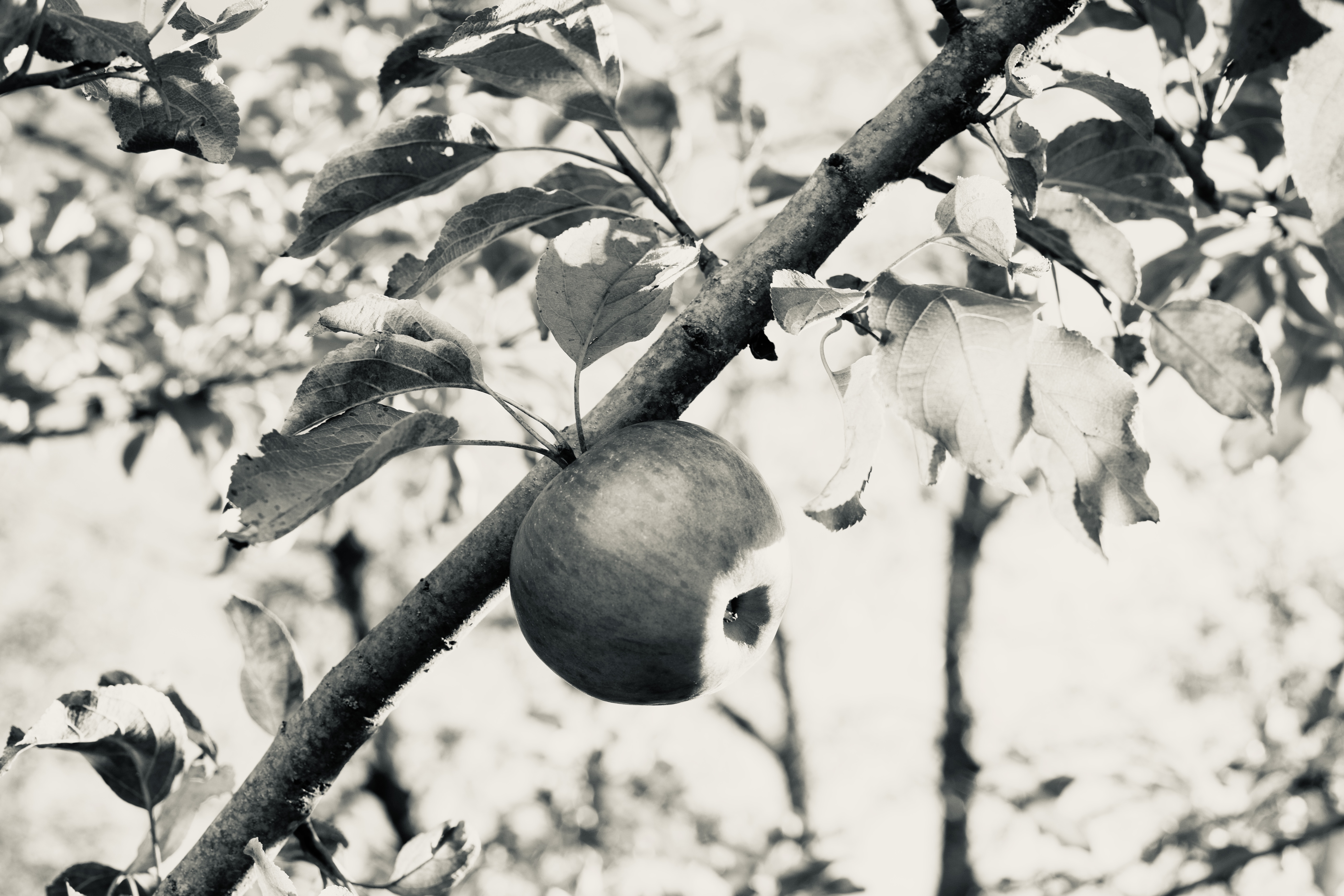
 like the house at the end of the hamlet. larger than the rest. too large for such a place. with high grey bricked walls surrounding the garden. it made me wonder what it had to hide. to protect. then i saw it. a large apple tree.
 just poking over the height of the wall. full with large red apples. so many. some were hanging down. almost within reach.
 i finished the third can. looked up at the apples. my stomach felt empty despite the drink. i needed something. a memory of apple scrumping with school friends came back to me. it never did any harm. just the one. the tree had so many. who would notice? i glanced along the road. no cars. no people. i reached up. finger tips grabbing the end. twisted and pulled. it came away. the branch sprung back. 
 ‘oi!’ came a cry.
 it was an old man. in green. through a gate.
 ‘give back that apple.’
 but i laughed. feeling eleven again. and ran. the old man trying to catch up. but i was younger. fitter..
 ‘you mustn’t’ came the cry as i left him.
 i glanced behind me. no old man. no hamlet. just the woods ahead. i would drink the last can. then the apple. my treat.
 the trees towered overhead. sun filtered through the leaves onto the forest floor covered in brown pine needles. the occasional stump. not a sound was heard except the odd branch disturbed by the movement of a bird or something else. i threw the empty can away. turned my attention to my ill-gotten gains. one apple. what a fuss over one apple. when there were so many. so so many. stupid old fool. i bit into its red skin. into its juicy flesh. it was sweet. juice dribbled down my chin. i wanted the all of it. every piece. the stalk. the core. the pips. none must be wasted. it was too good.
 my apple consumed. i set off further into the woods. past the trees. towering overhead. the rustle of birds. dappled light searching. there was a stab of pain in my stomach. sharp. piercing. stopped me in my tracks. another. sharper. it bent me double. skin clammy. face wet. pains down my legs. into my feet. sharp. cutting.
 my shoes seemed to press against my feet. shoes too small. tight. my feet hot. burning. i had to get my shoes off. now. i fought the pain in my stomach. untied the laces. shoes off. socks. to see my feet. at first nothing. as i stood bent. just pale pink flesh. toes. nails.
 a flash of heat. then a change to the skin. darkening. browning. thickening. the nails on my large toes split. divided. fell off. a terrible. my remaining nails popped. then thin. brown tendrils. burst through the skin.
 like teeth through grapes. brown tendrils twisting to the ground. into it. a few at first. then more. hot burning pain in my feet as roots burst through my heels. then all sides. into the ground. i scream.
 skin thickening all over. i try to rip my shirt off. but my skin is thickening. tightening. compressing. i find it hard to breathe. i try to gasp for breath. but i can’t breathe. i can’t breathe.
 hell. i can’t move. i’m stuck here. stuck. a hot burning sensation in my head. like someone stabbing with blades. 
 then the burning stops. and silence. just me. alone. in the woods. unable to move. the silence. a bird overhead.
 i can just see. a figure. a figure in green. he’s holding something. an axe. he’s holding an axe.
 ‘they never learn.’
 and. i can’t scream.