
30

Orange white and black cat

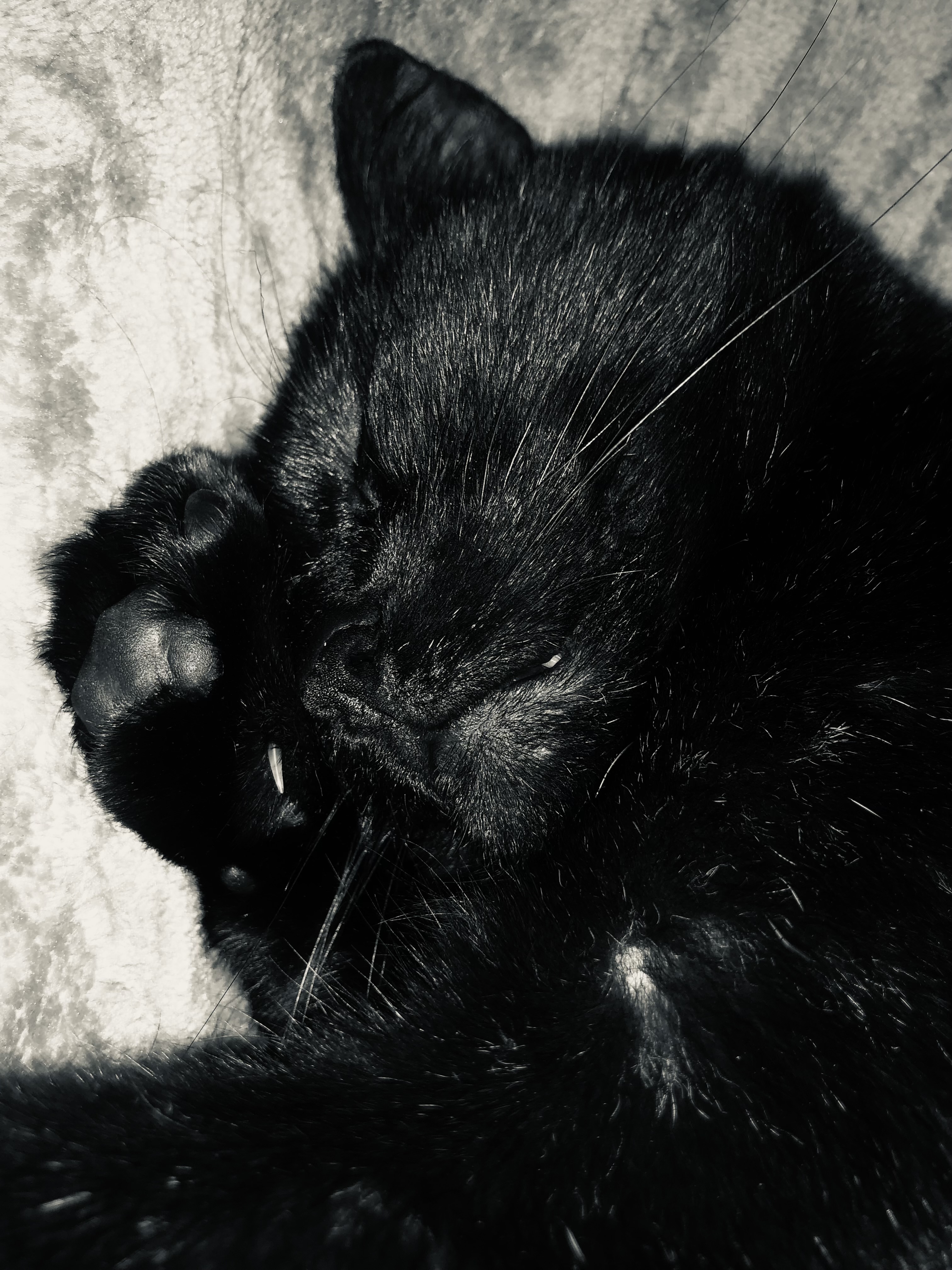
the cat sits on table and i in chair. the house is silent. not a sound. outside not a sound. not even a drunk on a phone swerving on route home. not a sound. silent. i sit in chair writing. gathering the thoughts of the day. now all is calm. a wine at hand. the voices have quietened. external.. internal.  now peace.. the room seems larger. bigger. full of. me. my thoughts. my moment. the quiet.  and me writing.  the light of the lamp casts shadows on the page. shadowing words. shadowing thoughts. moments. ideas. i pause to think.  to connect. recollect. and forget. a combination of desire, dream, and the movement of pen on paper. not sure where to go. being in shadow. once things were clear. clear as day. crisp in air. thought. but that moment has gone. so i sit in shadow. in the silence. with the lamp. cat on table. wine to hand.  the telly is on. but it does not speak. it too has succumbed to silence. the moment.  the hour. a flickering lamp. shadows dance.  then stop.  as my pen runs out of ink. and i am left in a moment in a silent room.

words

White paper on black background

i’ve always had a problem with words. not the deciding on them. not the thinking of them. the focusing on the words to use. the need to reach for a thesaurus because they just won’t come. not that problem. the word count. that’s the issue. no matter how big an idea or how many chapters i seem to always get a low word count.

i plan out my writing. brief lines with a few details what will happen in each chapter. then i begin and write. i sit down at my keyboard and tap away. the idea clear in my mind. full knowledge of the setting and what the character has to achieve in that chapter. i write the scene. describe the setting, add the action and dialogue. build it up as slow as i can. chapter finished. 1500-2000 words. where’s the rest of it? surely i can write longer?

being a two finger typist, i think: maybe its the typing. maybe i should revert back to the old pen and paper. ditch the modern technology. unhamper myself. free myself to write without the distractions a machine brings. but it’s no good. still the same length of chapter. 1500-2000 words. still the problem that the novel is just not long enough for publishers.

perhaps it goes back to me. i’ve never been one to talk lots. always one to listen. speak when i have something to say. something to share. my shaggy dog stories peter out. the dog dies before it gets to the end of the tale. conciseness is in my nature. why use 300 words when a sentence will do? there are some who can talk. really talk. add lots of detail and atmosphere. and write that way. but my thinking has always been why mention the table is red if the colour isn’t important? only mention the details that are important to the plot and events. cut back the chaff.

perhaps my whole approach is wrong. maybe i need to let forth with a wave of unnecessary words. use 100 when 10 would do. but it goes against my grain. perhaps, as i suspect, it is the demanded word counts are wrong that a novel should be the length it should be. should the ‘great gatsby’ be made longer because it doesn’t meet acceptable word counts? max porter’s work lengthened to an epic? or do the publishers need to be more flexible in their approach? is it time for change? perhaps selfish i know. me calling for a revolution just to suit how i write. but think of all the great writing lost because it didn’t meet a required format (i don’t include myself in this).

words. when are many too many? few too few?

sometimes

sometimes you are gripped with imposter syndrome and the feeling you are wasting your time in the futile gesture of putting words to a page in the hope that someday you will be happy with it that it was all worthwhile the evenings of doubt frustration regret hope the unending feeling that you are so close that it is just over there that knots your stomach at night as you try to sleep but your mind won’t rest as it is full of nagging questions about the viability of the project you are working on whether it was all just a foolhardy endeavour in the first place that you rushed in not heeding the warnings that you were overreaching you should try something simpler a haiku maybe no a single sentence start there but you foolish you decided to rush straight in and try and write a novel again with characters not fully formed just going through the paces in unformed scenes like shadows in an early 80’s video game with all line drawings and the only colour is green and you don’;t even like that so you are left with the realisation that your story is missing a big something a great big something and you are a failure you’ve let yourself down and the people you told you were writing a novel and ask how the progress is going but they have now learnt not to ask anymore as the answer is always the same it’s coming along slowly so you are lying there fretting about the blank page in your book that needs words and exhausted your eyes droop then close but just before they close the idea the solution pops in and you write it down on the page by your bed satisfied that the solution has been found you can rest easy now so you sleep happy only to wake the next day and look at that paper and wonder what the fuck that word means and you are right back where you were the day before with mr imposter syndrome.

anyway. it is sometimes good to remind ourselves why we got into this writing malarkey anyway. the best way i find for me is to pick up a book by a writer i like and read their words and be transported and enjoy the sensation of being carried somewhere and then i remember it is making others feel this way through my work is why i do it. the smiles on faces. the appreciative words. the collective joy. that’s why i do it.

in praise of the futile

a lot of my time recently has revolved around the issue of copyright and ai. if you’re wondering, i’m against allowing big tech to scrape the work of creatives to train ai without permission. it is theft plain and simple.

there are some who confuse having an idea with creativity. they mistakingly think it is the idea that trumps all. they disregard that creativity is a process. it is the process of flinging an idea into the open, developing it, refining it, abandoning parts, developing others. it is not the click of a button to generate a text or image or song. there is no human process there.

ai will never become creativity or be creative. ai solely seeks a quick fix profit. there will always be a profit margin for ai generated ideas. it will never explore the futile. the time spent on a creation that may not go anywhere. may not sell. is created just for the process and the act of creation. where there is no profit.

humans do not just create for profit. they create to experience a fuller understanding of their imaginative soul. to explore the connection between the sub-conscious and conscious. to play between the cracks. a flick of a button denies that. denies the fulfilment of the creative soul. the human needs to do the futile. to do something just because. it is what leads to advances and revelation. not the regurgitation of what has been.

embrace your futile self while you can. demand the right to be futile. to create without success or reward. to be human.

paper vomit

i always struggle with writing. i battle to put words on the page. splatter them on the whiteness. i guess it’s the combination of anxiety and the need for perfection. i worry if the words are not perfect. i physically need them to be perfect. heart beating. mind racing. hands tense.

if they’re not perfect i can’t move on. i can’t write another word. all i can think about is the imperfection. there is something wrong and i need to fix it. even if i can’t identify the flaw there is something that knows it is there. that it requires refining. tearing up and doing again. a single thousand word chapter can take me anything from two weeks to three months. before exhausted by the battle i move on. slow. glancing back at the previous words. the ugly.

i know the first draft is meant to be vomit on the page. i have read it said by wiser and more successful writers than i. just get it down. the edit will fix it. it is what the edit is for. the redraft. the first draft is just for getting the story down. it is only when it is finished you know what your story is really about. where to go next.

i guess it stems from childhood this affliction. my schooling. being told to get my story done ready to present to the teacher and the red pen. it had be perfect first time. we only had one shot at it. later, the schools recognise some redrafting had to be done. so it became a pattern of first draft, edit, final draft. but still that wasn’t enough time. the teacher still had a red pen. and there still were flaws. cracks in the works. why didn’t they allow more time?

i think it was to be kind to us. not to delusion us. writing is bloody hard. it takes hours of toil in a room with a blank page. battling to choose the right words. craft the story. create realistic characters that really speak. not recite. hour upon hour spent on getting it right. only for it to be finally ignored. left unread by our intended audience. who would let children see that? experience that? better to leave them with the dream that putting words to a page was possible by all. without that lie where would our writers come from?

moment 28

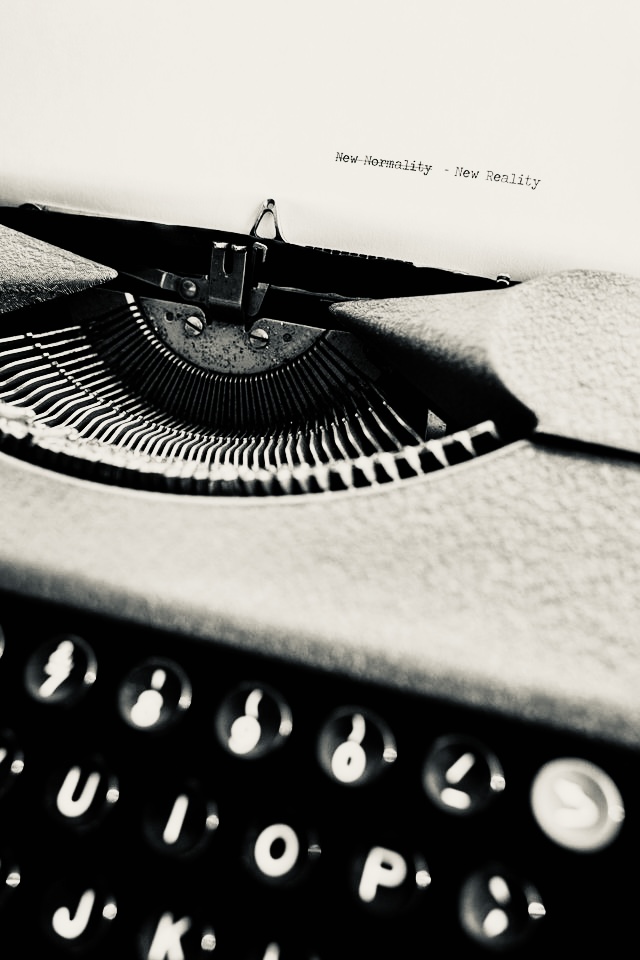
typewriter image. black and white.

he sat down typed a sentence then stopped. where another once followed there was nothing. just blank. not a thought. not a murmur. not a whisper. just nothing. he crossed the sentence out, moved the paper up. clean. blank. he typed a sentence, different this time. a start of a thought. but the thought remained hidden. elusive. he stopped. where another would follow there was nothing. he pulled the offending paper from the typewriter and tore it to pieces. he threw them about the room. they landed amongst others. he put a new sheet in the machine. stared at the page. once they had been friends. now they were enemies. an invisible barrier lay between them. a breath’s thickness but it was enough. perhaps today was the day. he stood up and made his way to the cellar. took a key off a nail and unlocked the gun cabinet. he took out the shotgun and two shells. he returned to the writing room. he lent the gun in the corner and placed the shells on the windowsill. upright. proud. he looked at them a moment and sat down. he rubbed the scar on his brow. perhaps today. he typed a sentence. a thought. a moment. and waited.

a psychogeography of turnpike lane

in the summer of 2023, during the haringey arts festival, i got involved with a writing project. the idea was to map the psychological reaction to local area in turnpike lane, london through pieces of poetry and prose. we spent an afternoon exploring and writing about the local area.

writers ventured out. made notes. then sat and scribbled a piece or pieces of writing. what resulted was a collection of work that spoke of different roads, shops, buildings, or journeys.

after some editing and compiling by clever people, a book was born. some abstract illustrations were added to accompany the work, and a year late the book was launched in london.

i attended a launch in the all good bookshop which is right in the heart of turnpike lane. extracts were read, discussion took place, plans were made, and whiskey dunk.

friday 20th september sees us at the magnificent st mary’s tower in hornsey to promote the book. it promises to an atmospheric evening of celebration, laughter, and possibly intrigue.

london

london has been the inspiration for my writing since i moved here over 25 years ago. from the outside you might think is a humongous whole on crossing the river thames like some great up turned turtle flailing it’s legs. or you might think it is just a large discarded black bin bag discarded carelessly across a stream. both would be somewhat true but inaccurate. fairer to say that london is a collection of towns, neighbourhoods, connected by the web that is the london underground system.
it is known for certain people to rarely leave their particular neighbourhood. to never venture much further than their local high street and corner shops. after all, what need for the centre of the city when you can find what you need on your doorstep? i have known children to have only for the first time to have experienced other polaris of the city, the tube, when taken on school trips with their schools. otherwise their familys stay put.
and who can blame them when you consider the city of london itself, the centre core, is made up of towering office buildings and bars and stores that close over the weekend. what to entice the venturous then? particularly when you factor in the increase in prices should you enter there.`
yet central has much to offer. numerous museums and galleries where you can seek inspiration for a tale. cafes where you can watch the world go by whilst surrounded by works from the past. hidden lanes that lead you to a bygone age of mystery with a pint in a boozer at the end where the decor and clients haven’t changed in years.
then outside of central you have the neighbourhoods. often referred to by their stop on the tube line. in the south: brixton and its caribbean roots gradually gentrifying with the influx of the thirty-somethings in search of their first homes. in the west: richmond where the money lives with leafy parks and pubs upon the thames. in the east: barking with sprawling council estates and descendants of the working class made good. in the north: haringey, the home of protest, upheaval. these are just some places but there are many more and everywhere, the wealthy rub shoulders with the poor divided by the post code they choose to live in.
with such variety and diversity in a living museum of culture, who could not get inspired to write? how could it not play a key role in the work im producing?

hemingway

i first came across hemingway when doing a course on writing at citylit, london. if you don’t know citylit, it’s an adult learning college locate near holborn tube. that big long road that winds it way down pass theatres and hotels to waterloo bridge and the south bank. citylit runs many creative courses and i heard good things about its writing courses and heard they were doable if on a budget. i’m always on a budget.

the courses are often taught by stabilised writers. this one was taught by scott bradfield. we were often set things to read. and he set us the short story ‘hills like white elephants’ to read. i read it. read it again. it was like a revelation to me. here was a writer cutting out loads of description, reams of adjectives and adverbs, to pare back the story to its essence. the writing was like a fresh of air. a chill winter wind that wakes you from a night of over indulgence. it was like hemingway was giving me permission to do something. something i had long thought.

i had studied literature as part of my ba. a diet of hardy, dh lawrence, and george eliot (oh god, george eliot). they loved their long winding descriptions where a hundred words were better than five. long rolling descriptions of the scenery. adjective upon adjective that wound their way across the pages before a character did something. followed by exposition. how they loved exposition.

i followed this by teaching primary and mainly reading children’s literature. children’s literature loved an adverb and adjective. not forgetting a liberal use of simile and as many words for ‘said’ you could think of. so did the national curriculum. this is what they decided good writing consisted of. no hemingway style for them. you had to use lots of adverbs and adjectives to tick the boxes. not forgetting the whole range of punctuation.

it is not surprising then that this is what i thought writing was. had to be. i had been fed a diet of word types. all the word types. used liberally and often. yet i was not satisfied. why did we have to mention all the senses? in every description? surely, you should focus on the important ones for that scene? and did we really need long passages of description to describe a setting whilst the character was left in limbo? doing nothing. waiting for us to finish. my thinking was we should treat the setting as a character. and f important to the plot. then we spent time on it. but if passing through. was there a need? i began to have doubts over the way writing was taught and the way i wrote.

so reading hemingway gave me approval of my ideas. to leave the adverbs behind. use adjectives sparingly. use five words instead of a hundred. cut writing to the bone. to the essential. to what i considered important. gone were adverbs. i went further. reducing articles. conjunctives. pairing back the range of punctuation. the length of a sentence. reducing the sentence to its minimum. to the minimal point at which it could still be understood.

my prose-poetry is a concentrated version of that. my short stories and the novel i’m working on. less so. grammarly would have a system failure reading those. and i continue to experiment. wonder how further i should push it. the results are here on this website. see what you think.

the photo? the significance of the photo? that’s me in a bar in barcelona that hemingway was meant to frequent. it was meant to have changed little since his time. unlike the bar. i think hemingway has changed writing forever.

writing routine

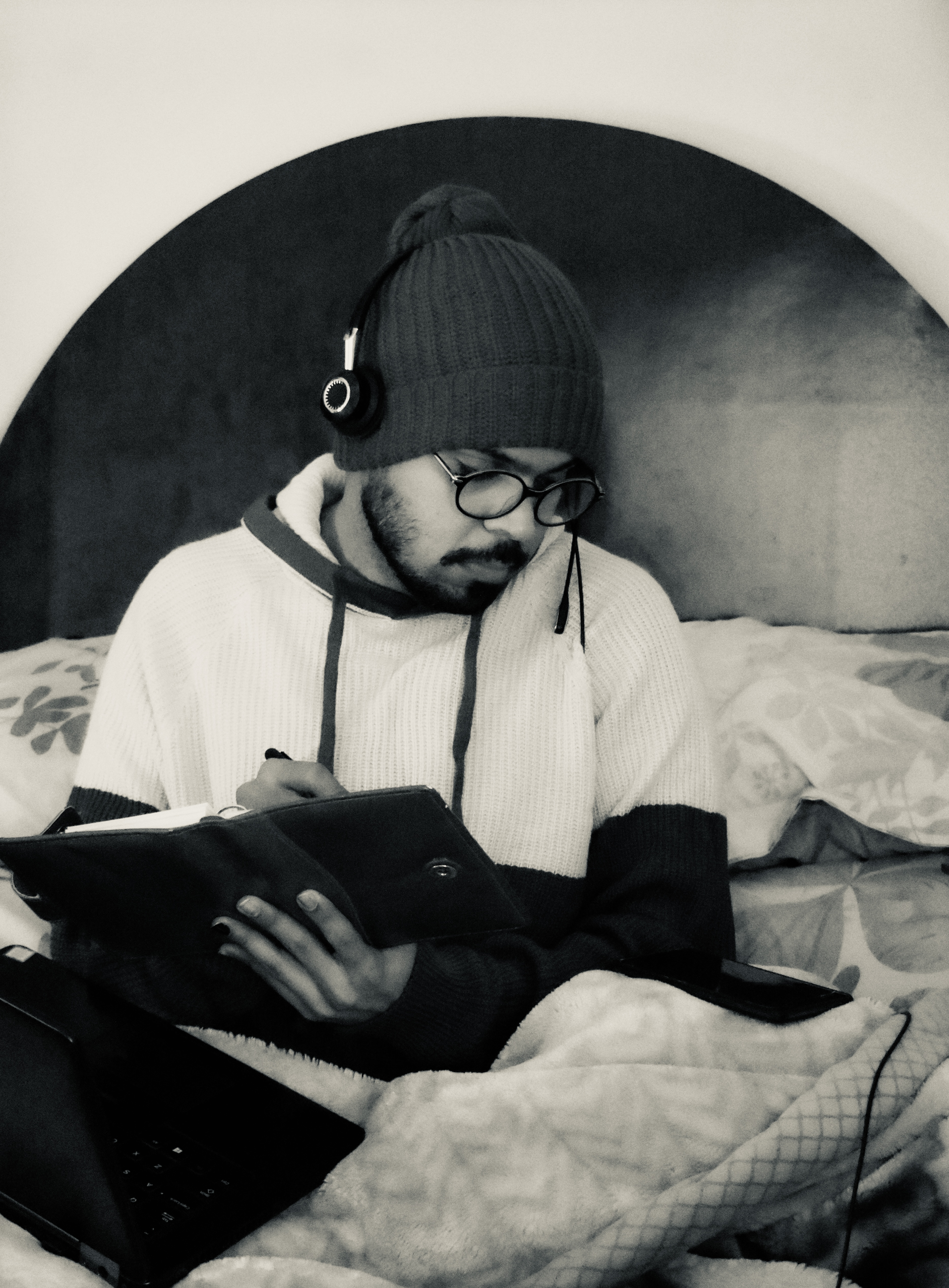
finding time to write can be problematic. it can affect getting into a routine. and can make the routine or writing habits you follow. many books advocate writing regularly. some say every day. i have never managed that. being busy with family life. and holding down two other jobs to pay the bills can impact on the time you have available. and by time: i’m not just on about physical time. the time to be free from work. i’m also on about the more important mental time. if you have stressful jobs that are mentally taxing and full on then it takes awhile to achieve quietness. the quietness you need to let your imagination play. explore. dance from thought to thought. place to place. if your’e mentally exhausted this takes longer. first you have to recoup. then gain the quietness. then focus on the writing.
so i snatch my quietness. my writing time. it is not regular. or frequent. and due to that. i forget. i forget what i have written before. where i am in my novel. the threads i have set up. i plot but they are brief notes. often single lines for a chapter. a glimpse as to what the chapter may hold. the rest i write on the hoof. by the seat of my pants.
this means i break all the rules of writing. i don’t edit after i’ve written a first draft. despite how many writers recommend this. i write a chapter or section. leave it whilst i turn my attention to family and jobs. return to the writing. read that chapter and edit. write the next chapter. i edit and write as i go.
i tend to find i don’t do a lot of change. maybe it’s because i ponder a lot what the next chapter is going to be. if i can remember it. think about the characters. the situation i left them in. and i’m a slow typist. that helps. i use just two fingers to type. this has the effect of slowing me down. so by the time i write a sentence or word it has been edited in my head several times. the paragraph shaped. that is why some writers advocate writing by hand. to allow time to think.
when i wrote my first novel. it was by hand. and the edits. only at the final stage did i type it up. i still do some writing by pen. my prose-poetry. it is straight from pen to paper then to ipad. a few changes on the way. novels are straight onto ipad.
i use Scrivener. i like the corkboard and how it can be used to easily shift things around or generate an outline. the outline proves very useful writing a synopsis for agents, etc. i write my novels sequentially. i don’t hop to a scene if stuck. some writers do that. but i can’t work that way. i need to solve a problem before i move on. not that i have many problems. due to all the time between chapters and typing it down i usually have them ironed out in my head.
i also make use of a good writing group. it is local to me and offers invaluable insight on what i’ve written. they will point out if something doesn’t quite work or needs fleshing out more. and it provides a good indicator how a reader might react. do they laugh when you intended? were they surprised by an outcome as you wanted? or was it all guessed too earlier in the story, leaving no surprises?
writing groups also give a good incentive to write. you want to make it worthwhile going. to offer something to an audience. to not go empty handed. this keeps you on track.
however you write is up to you. you find your own path. despite what some may think. there is no secret formula to writing a novel or getting a book published. it is all out there. you can read loads of books on the subject for suggestions. but ultimately it is down to you. your words. your effort.