divided worlds

there is separation that exists in all writing. the writer knows it is there. tries to ignore. pretend it doesn’t exist never existed shouldn’t exist must not exist does not deserve to exist but nevertheless persists in its existence. it hangs there. on the edge. like a small snag of fingernail that catches on a jumper as you pull it on and with a sudden sharp pain makes you aware.

a writer sets out when writing a piece in a belief a commitment a fallacy that what they imagine to be what they can imagine to be will come to be. will exist. once they have put pen to paper. drafted. edited. rewritten. checked. line-edited. drafted again. but it is not there. the thing they imagined does not exist. their writing cannot not create it. even if they were to train a million apes brought up on shakespeare how to type and gave them their work to work on for a million years the problem wouldn’t be solved. the final draft would exist but be lacking. would have a distance between the imagined and the reality of the word.

this distance is what writers have to live with. each time they put pen to page. make their plans. start to write. they know they will not achieve the story they set out to do. that there will be a piece lacking. a slither where their skill was just not enough. but they lie to themselves that this time it will be different this time they will be better and sometimes they are and this time they will put their all to it and pull each and every imaginative writing sinew to the creation of their work. but they know they tell themselves a lie. that it is a lie to get them started. else they would never begin or go mad during the writing process.

that is why all writers are great liars. they tell themselves most fundamental untruth to themselves and their reader. they see this is what i had planned this is what i intended now buy my perfect book. but we know this to be untrue. and the reader and writer join in with this lie. form a bond in untruth. until the next time.

end of eras

air balloons in sky over Bristol, UK

it has been a time of end of eras. things coming to a close or a major change happening after many years of just coasting along. days unchanging. constant. sure.

the first of these changes has been no.1 child finishing their ‘a’ levels and launching themselves onto the world. they are full of ideas and enthusiasm for what lies ahead, edged with a hint of steely determination. i think they are better prepared than i was at the same stage in life. much more knowledgable and wise.

part of this launch was moving out of the house for 10 weeks to do a course in bristol. the last time i was there was probably for an evening when my friends and i dove up from taunton and went to a large warehouse where four punk bands were playing. the headliner was the henry rollins band. i think he was also trying to flog a poetry book as well.

i have mixed emotions about the departure of no.1. i’m losing a buddy who always had something interesting to talk about. a new discovery. there is a space in the house where they were. but i’m also excited to see what will happen on their journey. what new adventures they will report back on. what life holds for them.

the second end was finishing my WIP. my novella. i started it in october 2022 and it has been with me sporadically since then. it has been the hardest piece of writing to write. it was out of my comfort zone. it had a number of elements i had to juggle and they needed to all land successfully. it was also the most planned because of this. i had to make every step right.

i was sporadic in the writing because i made some major changes to my life. changed my working world. made it less certain. and i’m older than when i wrote ‘wishbone billy.’ i don’t have the energy to do the late nights writing. and i find i also lack the focus now since the covid pandemic and lockdown. my ability to concentrate for long periods has dropped. i’m sure there will be a study somewhere which will look at the impact of covid on the mind. on cognitive function. if not, there should be.

and there was the doubt.the great shadow of the imposter raven on my shoulder. waiting. pecking. freezing my mind. it took some battling some days to overcome it and put words to page. to have the confidence in the project. the belief i could do it. i had to keep telling myself i had done it before. i could do it again.

and so three years later the first draft is done. finished. it is out to beta readers who will come back with an honest verdict on the thing. i look forward to hearing. and am beginning to ponder part two of the series. at the moment it is just a vague thought. but it is forming. ticking over. i’m excited by what my mind will generate.

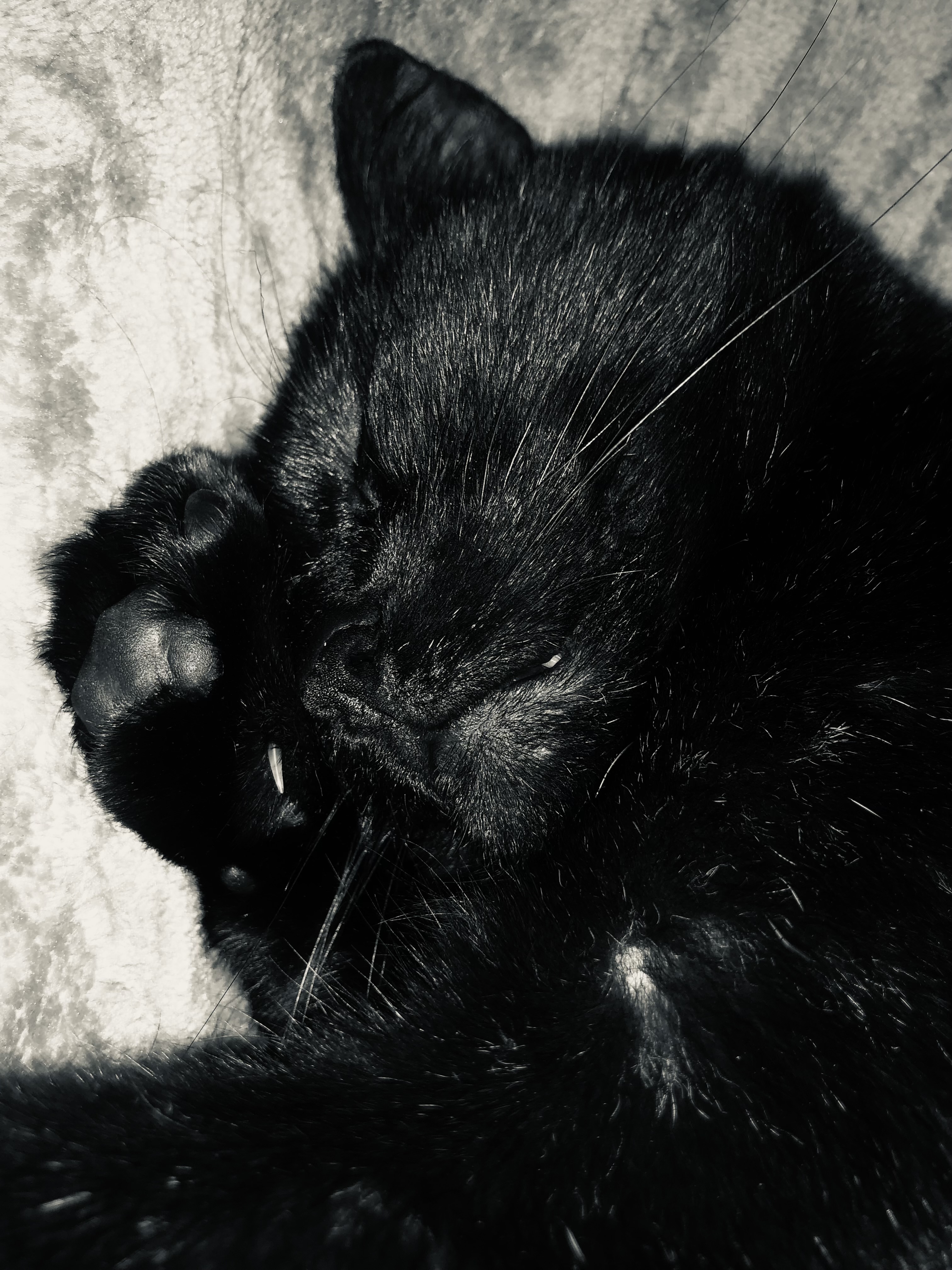
the last end. the last end of the era. was the death of kaos my cat. he has been at my side many a time as i sat writing. he had appeared in many a prosepoem. but his time had come to an end. it was quick. surprising. heart breaking. there is a small space in the house where he should be. but he is not there. and when i sit at night to read or write it is just that bit more lonely. i think there will be the patter of his feet and a jump as he lands on my lap. but there is nothing. just me. my book. my writing.

Kaos the cat. black cat.

words

White paper on black background

i’ve always had a problem with words. not the deciding on them. not the thinking of them. the focusing on the words to use. the need to reach for a thesaurus because they just won’t come. not that problem. the word count. that’s the issue. no matter how big an idea or how many chapters i seem to always get a low word count.

i plan out my writing. brief lines with a few details what will happen in each chapter. then i begin and write. i sit down at my keyboard and tap away. the idea clear in my mind. full knowledge of the setting and what the character has to achieve in that chapter. i write the scene. describe the setting, add the action and dialogue. build it up as slow as i can. chapter finished. 1500-2000 words. where’s the rest of it? surely i can write longer?

being a two finger typist, i think: maybe its the typing. maybe i should revert back to the old pen and paper. ditch the modern technology. unhamper myself. free myself to write without the distractions a machine brings. but it’s no good. still the same length of chapter. 1500-2000 words. still the problem that the novel is just not long enough for publishers.

perhaps it goes back to me. i’ve never been one to talk lots. always one to listen. speak when i have something to say. something to share. my shaggy dog stories peter out. the dog dies before it gets to the end of the tale. conciseness is in my nature. why use 300 words when a sentence will do? there are some who can talk. really talk. add lots of detail and atmosphere. and write that way. but my thinking has always been why mention the table is red if the colour isn’t important? only mention the details that are important to the plot and events. cut back the chaff.

perhaps my whole approach is wrong. maybe i need to let forth with a wave of unnecessary words. use 100 when 10 would do. but it goes against my grain. perhaps, as i suspect, it is the demanded word counts are wrong that a novel should be the length it should be. should the ‘great gatsby’ be made longer because it doesn’t meet acceptable word counts? max porter’s work lengthened to an epic? or do the publishers need to be more flexible in their approach? is it time for change? perhaps selfish i know. me calling for a revolution just to suit how i write. but think of all the great writing lost because it didn’t meet a required format (i don’t include myself in this).

words. when are many too many? few too few?

moment 28

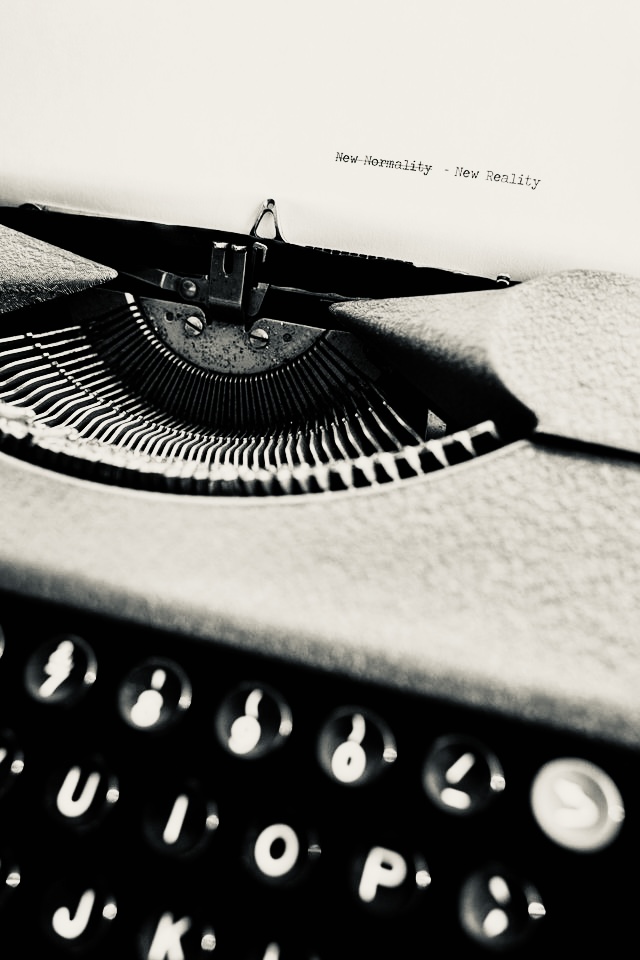
typewriter image. black and white.

he sat down typed a sentence then stopped. where another once followed there was nothing. just blank. not a thought. not a murmur. not a whisper. just nothing. he crossed the sentence out, moved the paper up. clean. blank. he typed a sentence, different this time. a start of a thought. but the thought remained hidden. elusive. he stopped. where another would follow there was nothing. he pulled the offending paper from the typewriter and tore it to pieces. he threw them about the room. they landed amongst others. he put a new sheet in the machine. stared at the page. once they had been friends. now they were enemies. an invisible barrier lay between them. a breath’s thickness but it was enough. perhaps today was the day. he stood up and made his way to the cellar. took a key off a nail and unlocked the gun cabinet. he took out the shotgun and two shells. he returned to the writing room. he lent the gun in the corner and placed the shells on the windowsill. upright. proud. he looked at them a moment and sat down. he rubbed the scar on his brow. perhaps today. he typed a sentence. a thought. a moment. and waited.

london

london has been the inspiration for my writing since i moved here over 25 years ago. from the outside you might think is a humongous whole on crossing the river thames like some great up turned turtle flailing it’s legs. or you might think it is just a large discarded black bin bag discarded carelessly across a stream. both would be somewhat true but inaccurate. fairer to say that london is a collection of towns, neighbourhoods, connected by the web that is the london underground system.
it is known for certain people to rarely leave their particular neighbourhood. to never venture much further than their local high street and corner shops. after all, what need for the centre of the city when you can find what you need on your doorstep? i have known children to have only for the first time to have experienced other polaris of the city, the tube, when taken on school trips with their schools. otherwise their familys stay put.
and who can blame them when you consider the city of london itself, the centre core, is made up of towering office buildings and bars and stores that close over the weekend. what to entice the venturous then? particularly when you factor in the increase in prices should you enter there.`
yet central has much to offer. numerous museums and galleries where you can seek inspiration for a tale. cafes where you can watch the world go by whilst surrounded by works from the past. hidden lanes that lead you to a bygone age of mystery with a pint in a boozer at the end where the decor and clients haven’t changed in years.
then outside of central you have the neighbourhoods. often referred to by their stop on the tube line. in the south: brixton and its caribbean roots gradually gentrifying with the influx of the thirty-somethings in search of their first homes. in the west: richmond where the money lives with leafy parks and pubs upon the thames. in the east: barking with sprawling council estates and descendants of the working class made good. in the north: haringey, the home of protest, upheaval. these are just some places but there are many more and everywhere, the wealthy rub shoulders with the poor divided by the post code they choose to live in.
with such variety and diversity in a living museum of culture, who could not get inspired to write? how could it not play a key role in the work im producing?

hemingway

i first came across hemingway when doing a course on writing at citylit, london. if you don’t know citylit, it’s an adult learning college locate near holborn tube. that big long road that winds it way down pass theatres and hotels to waterloo bridge and the south bank. citylit runs many creative courses and i heard good things about its writing courses and heard they were doable if on a budget. i’m always on a budget.

the courses are often taught by stabilised writers. this one was taught by scott bradfield. we were often set things to read. and he set us the short story ‘hills like white elephants’ to read. i read it. read it again. it was like a revelation to me. here was a writer cutting out loads of description, reams of adjectives and adverbs, to pare back the story to its essence. the writing was like a fresh of air. a chill winter wind that wakes you from a night of over indulgence. it was like hemingway was giving me permission to do something. something i had long thought.

i had studied literature as part of my ba. a diet of hardy, dh lawrence, and george eliot (oh god, george eliot). they loved their long winding descriptions where a hundred words were better than five. long rolling descriptions of the scenery. adjective upon adjective that wound their way across the pages before a character did something. followed by exposition. how they loved exposition.

i followed this by teaching primary and mainly reading children’s literature. children’s literature loved an adverb and adjective. not forgetting a liberal use of simile and as many words for ‘said’ you could think of. so did the national curriculum. this is what they decided good writing consisted of. no hemingway style for them. you had to use lots of adverbs and adjectives to tick the boxes. not forgetting the whole range of punctuation.

it is not surprising then that this is what i thought writing was. had to be. i had been fed a diet of word types. all the word types. used liberally and often. yet i was not satisfied. why did we have to mention all the senses? in every description? surely, you should focus on the important ones for that scene? and did we really need long passages of description to describe a setting whilst the character was left in limbo? doing nothing. waiting for us to finish. my thinking was we should treat the setting as a character. and f important to the plot. then we spent time on it. but if passing through. was there a need? i began to have doubts over the way writing was taught and the way i wrote.

so reading hemingway gave me approval of my ideas. to leave the adverbs behind. use adjectives sparingly. use five words instead of a hundred. cut writing to the bone. to the essential. to what i considered important. gone were adverbs. i went further. reducing articles. conjunctives. pairing back the range of punctuation. the length of a sentence. reducing the sentence to its minimum. to the minimal point at which it could still be understood.

my prose-poetry is a concentrated version of that. my short stories and the novel i’m working on. less so. grammarly would have a system failure reading those. and i continue to experiment. wonder how further i should push it. the results are here on this website. see what you think.

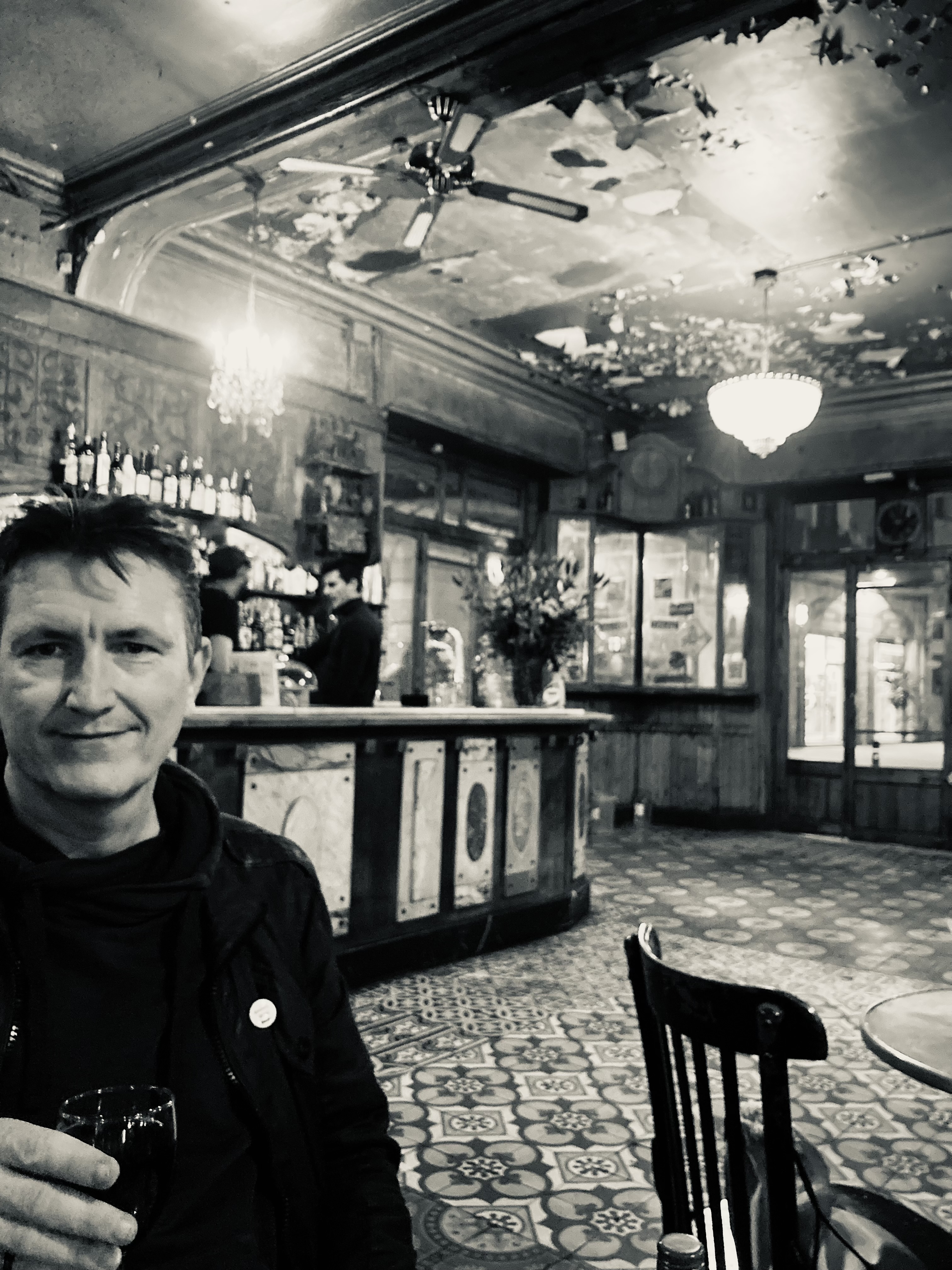
the photo? the significance of the photo? that’s me in a bar in barcelona that hemingway was meant to frequent. it was meant to have changed little since his time. unlike the bar. i think hemingway has changed writing forever.

writing routine

finding time to write can be problematic. it can affect getting into a routine. and can make the routine or writing habits you follow. many books advocate writing regularly. some say every day. i have never managed that. being busy with family life. and holding down two other jobs to pay the bills can impact on the time you have available. and by time: i’m not just on about physical time. the time to be free from work. i’m also on about the more important mental time. if you have stressful jobs that are mentally taxing and full on then it takes awhile to achieve quietness. the quietness you need to let your imagination play. explore. dance from thought to thought. place to place. if your’e mentally exhausted this takes longer. first you have to recoup. then gain the quietness. then focus on the writing.
so i snatch my quietness. my writing time. it is not regular. or frequent. and due to that. i forget. i forget what i have written before. where i am in my novel. the threads i have set up. i plot but they are brief notes. often single lines for a chapter. a glimpse as to what the chapter may hold. the rest i write on the hoof. by the seat of my pants.
this means i break all the rules of writing. i don’t edit after i’ve written a first draft. despite how many writers recommend this. i write a chapter or section. leave it whilst i turn my attention to family and jobs. return to the writing. read that chapter and edit. write the next chapter. i edit and write as i go.
i tend to find i don’t do a lot of change. maybe it’s because i ponder a lot what the next chapter is going to be. if i can remember it. think about the characters. the situation i left them in. and i’m a slow typist. that helps. i use just two fingers to type. this has the effect of slowing me down. so by the time i write a sentence or word it has been edited in my head several times. the paragraph shaped. that is why some writers advocate writing by hand. to allow time to think.
when i wrote my first novel. it was by hand. and the edits. only at the final stage did i type it up. i still do some writing by pen. my prose-poetry. it is straight from pen to paper then to ipad. a few changes on the way. novels are straight onto ipad.
i use Scrivener. i like the corkboard and how it can be used to easily shift things around or generate an outline. the outline proves very useful writing a synopsis for agents, etc. i write my novels sequentially. i don’t hop to a scene if stuck. some writers do that. but i can’t work that way. i need to solve a problem before i move on. not that i have many problems. due to all the time between chapters and typing it down i usually have them ironed out in my head.
i also make use of a good writing group. it is local to me and offers invaluable insight on what i’ve written. they will point out if something doesn’t quite work or needs fleshing out more. and it provides a good indicator how a reader might react. do they laugh when you intended? were they surprised by an outcome as you wanted? or was it all guessed too earlier in the story, leaving no surprises?
writing groups also give a good incentive to write. you want to make it worthwhile going. to offer something to an audience. to not go empty handed. this keeps you on track.
however you write is up to you. you find your own path. despite what some may think. there is no secret formula to writing a novel or getting a book published. it is all out there. you can read loads of books on the subject for suggestions. but ultimately it is down to you. your words. your effort.

stuff about writing

Image of cup with writing on it. Prose poem writing.

So I have been reading ‘Swallowed by a Whale’ which is a book all about writing by writers and I have come to a few conclusions about writing.


1) Write. You should write. There is no avoiding it. Even if you dislike it. You have to write to become a writer. Many say each day. Or regularly. The amount of time does not matter or the word count. The important thing is to do some writing. Not to put it off. Procrastinate. Clean the tiles in the kitchen with a toothbrush. After all, that blank page will not fill itself.

2) Thinking counts as writing. Daydreaming counts as writing. Going for a walk daydreaming about thinking about writing counts as writing. It is important to do. It solves writing problems. It gives your mind space to create. No need to ask permission. Just do it. I find walking somewhere or sitting in a pub always works for me. Try it.

3) Adverbs are out. And adjectives as well. Exclamation marks for some reason! I have no idea why. They just say they are. Words will be next. You have been warned.

4) Where you write doesn’t matter. At a table. On the tube. In a specially constructed hut with all your nice things that someone else paid for (I wish). I tend to write in pubs. I find if I am away from household things I’m not feeling guilty about the things I haven’t done. I can give myself permission to write. When I’m in the house and writing I feel neglectful.

5) Get your first draft down and don’t worry too much about errors. Do not start rewriting your first few chapters over and over again as much of it will be cut. Mind you, I don’t follow that rule at the moment. I am writing a chapter, taking an enforced break, re-writing that chapter, write a new one. I find it gets me back in to writing as I can’t always write every day. It continues my flow and allows me to think of ideas to add to a chapter and act on it within a short time frame. I’m no good at making novel writing notes. Mine would be too brief so completely incomprehensible when going back to a chapter. Or so detailed, they would take longer than the novel. My approach works for me. It may work for you. Try it. Think about. Then do it your way.

6) Do not compare yourself to other writers or try to be another writer. You can’t. You can only be you. Their books you read have had a lot of time spent on so your first draft won’t be like that. And their lived experience makes them what they are and how they write. If you try to copy, it will be a pale imitation. Write you. Do not worry about other writers’ success. Think about your own triumphs. Set yourself small manageable goals. It is the nature of writing that you will never be happy with what you have achieved. Sorry. But we are riddled with self doubt. Even great writers like Dickens thought their writing might not be up to scratch.

7) Do not read reviews. Positive ones will only enlarge the ego and make you think you are a master of your craft and don’t need to improve. This leads to stagnation. Or you will think you are terrible and stay awake every night thinking about them. Just be happy if someone buys your book. If only just once. Someone liked the idea. You.

9) If you’re writing you are a writer. No one says to an unexhibited artist they’re not an artist or unrecorded musician they are not a musician. If you create you are a creator. You don’t need permission or official recognition to be a writer. Are you writing? Then you’re a writer. It’s that simple.

10) Writers like lists. They’re quick to write.

Thoughts based on Swallowed by A Whale (How to survive the writing life),’Edited by Huw Lewis-Jones.

Wild Words Festival 2022

So Friday 3rd to Sunday 5th June is the Wild Words Festival in Cuffley, Hertforshire. I am on stage Friday at 4:30pm and I must say I am really looking forward to it.

I have been sifting through my children’s poems to find daft ones, silly ones, disgusting ones to share to warm the audience up before we get onto the serious business of wishes.

Wishes are so important to stories. Without them many things would not happen. Events would not take place and characters would not be motivated to do something. Of course, the problem with making a wish is that usually something goes wrong as Billy found out Wishbone Billy.

If you can make the festival, do say high and do let me know what you thought of my books if you bought them. I always love to find out from children what they think. If you can’t make the Wish Wonder you will probably find me hanging out in the festival’s bookshop buying more books when I really shouldn’t. I have so many to read already!

Anyway, whatever you are doing over the weekend don’t forget to take time to find a quiet space and make a wish. Maybe just a small one. You never know who might be listening.

Little Devil In My Ear


There’s a condition that plagues all writers. If you come across a writer of any sort who says they never suffer this then they are a liar. It’s the Little Devil On Your Shoulder that whispers in your ear. Some psychologists call it imposter syndrome and writers may refer to it as writer’s block but I know better. It is an invisible devil that sits there waiting for you to write. Just as pen touches paper it begins it’s games. It tells you You Can’t Write. It laughs Call That A Sentence? It says Everyone Will Think That Rubbish!

My devil still pesters me despite kids secretly reading Wishbone Billy at night or having 5 star reviews on Amazon or receiving positive responses from my author visits. That devilish negative voice can be so loud. It stops you from writing anything. You procrastinate: watch junk TV, tidy the house, daydream. The pen lies still.

I am not the only writer to suffer the devil. Vivian Gornick, critic and journalist says of it: I would look at the words on the page – still do – and think, ‘This is so naive. This is so stupid. Who’s going to want to read this?’ It was even said of the brilliant Scott Fitzgerald of Great Gatsby fame that he fell into the devil’s hands after an estatic review from Gilbert Seldes. Poor Fitzgerald, after that every word had to be brilliant, every work deserving of high praise.

The devil by the ear attacks children too. I see it every day. It tells them they can’t write. It laughs at their efforts. Their page remains  empty. Their teacher grows impatient. What can be done? We must fight against the devil together.

Pick up that pen. Strike a blow to the devil’s head. Tie it up with adjectives, smother it in similes, drown it in metaphor. Let your pen roam free. It doesn’t matter what you write. It can be as sensible or silly as you want. You can write. You’ve been writing since your first crayon marks in nursery. Each word deserves an ovation. That devil knows nothing. Kick it away!

This piece of writing waas brought to you care of one squashed devil.