falling

writing is hard. and life gets in the way. i had the day planned. a few household chores. iron a few items for work. clear the table. write. re-write the chapter i’ve been failing to write for two months. but then life sends a curve ball. your path gets skewed. the odd jobs take longer. your mind won’t settle. won’t clear. too focused on the tomorrow. too focused on the before. no space for the now. you become exhausted by it all. the pressure on the self. mind blocks. you are prevented from getting into the creative zone. the point where your mind wanders, creates, imagines. plays games. instead you are stuck in reality. concrete grey blocks surround you. blind your vision. a single tone of grey.

anyway. it’s been one of those days. i got no writing done.

stuff about writing

Image of cup with writing on it. Prose poem writing.

So I have been reading ‘Swallowed by a Whale’ which is a book all about writing by writers and I have come to a few conclusions about writing.


1) Write. You should write. There is no avoiding it. Even if you dislike it. You have to write to become a writer. Many say each day. Or regularly. The amount of time does not matter or the word count. The important thing is to do some writing. Not to put it off. Procrastinate. Clean the tiles in the kitchen with a toothbrush. After all, that blank page will not fill itself.

2) Thinking counts as writing. Daydreaming counts as writing. Going for a walk daydreaming about thinking about writing counts as writing. It is important to do. It solves writing problems. It gives your mind space to create. No need to ask permission. Just do it. I find walking somewhere or sitting in a pub always works for me. Try it.

3) Adverbs are out. And adjectives as well. Exclamation marks for some reason! I have no idea why. They just say they are. Words will be next. You have been warned.

4) Where you write doesn’t matter. At a table. On the tube. In a specially constructed hut with all your nice things that someone else paid for (I wish). I tend to write in pubs. I find if I am away from household things I’m not feeling guilty about the things I haven’t done. I can give myself permission to write. When I’m in the house and writing I feel neglectful.

5) Get your first draft down and don’t worry too much about errors. Do not start rewriting your first few chapters over and over again as much of it will be cut. Mind you, I don’t follow that rule at the moment. I am writing a chapter, taking an enforced break, re-writing that chapter, write a new one. I find it gets me back in to writing as I can’t always write every day. It continues my flow and allows me to think of ideas to add to a chapter and act on it within a short time frame. I’m no good at making novel writing notes. Mine would be too brief so completely incomprehensible when going back to a chapter. Or so detailed, they would take longer than the novel. My approach works for me. It may work for you. Try it. Think about. Then do it your way.

6) Do not compare yourself to other writers or try to be another writer. You can’t. You can only be you. Their books you read have had a lot of time spent on so your first draft won’t be like that. And their lived experience makes them what they are and how they write. If you try to copy, it will be a pale imitation. Write you. Do not worry about other writers’ success. Think about your own triumphs. Set yourself small manageable goals. It is the nature of writing that you will never be happy with what you have achieved. Sorry. But we are riddled with self doubt. Even great writers like Dickens thought their writing might not be up to scratch.

7) Do not read reviews. Positive ones will only enlarge the ego and make you think you are a master of your craft and don’t need to improve. This leads to stagnation. Or you will think you are terrible and stay awake every night thinking about them. Just be happy if someone buys your book. If only just once. Someone liked the idea. You.

9) If you’re writing you are a writer. No one says to an unexhibited artist they’re not an artist or unrecorded musician they are not a musician. If you create you are a creator. You don’t need permission or official recognition to be a writer. Are you writing? Then you’re a writer. It’s that simple.

10) Writers like lists. They’re quick to write.

Thoughts based on Swallowed by A Whale (How to survive the writing life),’Edited by Huw Lewis-Jones.

2022 and all that

Well, 2022 brought a number of changes which impacted on what I write here. I have been submitting a new novel for consideration. But primarily, I have been writing a lot of prose-poetry. This has led me to the new outlet for my writing of Spoken Word.

What is Spoken Word?

Spoken word is when you perform any piece of writing to a group of people. It is often poetry but can be a story, monologue, or something else. It is quite flexible as to format.

Due to writing a lot of prose-poetry and sharing at my favourite writing group, I was encouraged to attend a Spoken Word night. I went along, sat, watched, then thought: I want to set up one of those. And where better than my favourite bookshop in my local area. So far they have been going well and I have been exposed to some great fresh writing that excites me and always leaves me thinking. Such a variety is on offer. All unique voices that should be heard.

Children love Spoken Word and enjoy writing poetry so it is a great thing to do for World Book Week. Why not start by enjoying watching some Michael Rosen, Benjamin Zephaniah, John Hegley, Kate Tempest, or Anthony Joseph?

As well as Spoken Word, I have been plotting and writing another one. I have changed my approach and audience for it. I’m venturing somewhere new. It is challenging and exciting. I’m trying to apply some of the approaches I use for my prose-poetry to the novel writing. I’m not sure it will work. Only time can tell.

What have you been doing?

Wild Words Festival 2022

So Friday 3rd to Sunday 5th June is the Wild Words Festival in Cuffley, Hertforshire. I am on stage Friday at 4:30pm and I must say I am really looking forward to it.

I have been sifting through my children’s poems to find daft ones, silly ones, disgusting ones to share to warm the audience up before we get onto the serious business of wishes.

Wishes are so important to stories. Without them many things would not happen. Events would not take place and characters would not be motivated to do something. Of course, the problem with making a wish is that usually something goes wrong as Billy found out Wishbone Billy.

If you can make the festival, do say high and do let me know what you thought of my books if you bought them. I always love to find out from children what they think. If you can’t make the Wish Wonder you will probably find me hanging out in the festival’s bookshop buying more books when I really shouldn’t. I have so many to read already!

Anyway, whatever you are doing over the weekend don’t forget to take time to find a quiet space and make a wish. Maybe just a small one. You never know who might be listening.

Moment 57

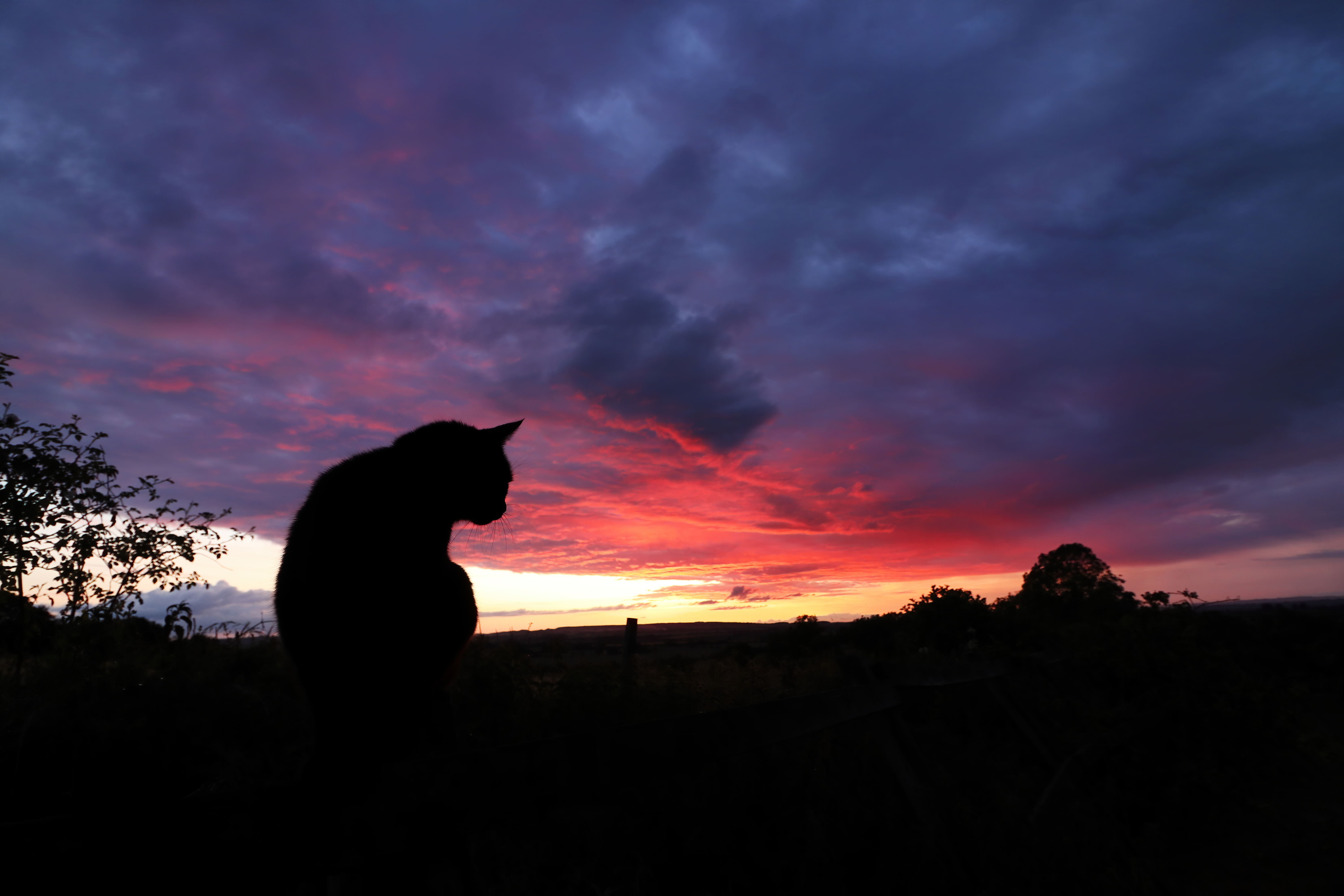
Almost night. The light dims. The time when the big ones sleep. It is your time. Time to rise and stretch. Take a bite. A drink. To explore. A garden of possibilities.
Not star dark yet.
You sniff the air. Feel the night breeze on your face. Stroking you. A distant sound. Dog calling. Too distant for trouble. A jump. A gymnast on a bar. You dance along. Instinct.
Then sit.
This will be the last time. You feel it. In your paws. In your bones. The coming of the end. No more to watch the flight of falling stars. No more to search among the ground for the exciting. You think back to the loves. The wars. They are gone now. Only you remain.
Silver at your ears. Watching the days. But this the last. No more.
The end of nine.

This came about thinking of a twilight memory. It struck me it would be more interesting if it wasn’t a human but an animal thinking of their life. I chose second person as I wanted to put the reader into the body of the animal. To become the animal. To make them closer to the animal. To increase empathy. I think it works.

Moment 12

Last night I ate sea urchin. It tasted of the ocean. The body soaked with the tears of whales crying for the loss of their children. The warm fur of a white seal pup before it meets its end at the hand of cruelty. The plastic embrace of a shopping bag around the throat of an arctic tern. It cried for its fish brothers that nevermore would dart between its feelers searching for food. It whispered to me of lost porpoises trapped in nets raping the sea. It told of sharks too fearful to leave the sunken ships of death’s folly. I heard the boasts of old sailors swapping trinkets for lives. I stopped a moment and put the chopsticks down. Then ordered another item from the menu. One without the bitter taste.

This came about after going to a restaurant and trying sea urchin for the first time. It got me thinking about how we abuse the sea, the plastics and rubbish littered there, and the depletion of fish numbers as well as other mammals.

Moment

There is that sweet moment of the day when silence seems to descend and time holds still and even the bustle of a packed café remains unnoticed as you let your mind wander, take a turn down a path, untrodden, overgrown with branches forming a canopy of green, and as you wander you begin to notice the magical figures that flitter between the leaves, darting from flower to flower to add a sparkle of colour, and just ahead you glimpse a white steed, a unicorn, drinking from a brook as an elf plays a lullaby on a panpipe, an it is at these moments you paint a scene, craft a character and place them, give them words to say and a task to do, a quest to strive after, to reach for like the words you seek to place on a page, a phrase of imagination, and then you pause for a moment, look around, and realise where you are, in that café, surrounded by people.

This came about when wondering what to write. It had been a while since I wrote something new as I had been spending my time editing a book of mine ready for submission so the creative muscle was rusty. And whilst sat there in the open with a coffee nearby, it reminded me of all those times when time stood still as I wrote, how it could take you places and how a good piece of writing could also take its reader places. So I wrote about that moment.

Pulling A Blank


22504F9C-90B1-4611-B70F-22C901E5A62C.jpeg

You will have noticed I haven’t written an entry for my blog for a while. There is no great mystery behind it. I was not kidnapped, transported to another planet or plummeted into a mystical realm like the children of Narnia. No. It is quite simple. I was going through what many writers go through at various points when writing: writer’s block.  I just couldn’t think of anything to write for my blog.

Maybe it was because my creative energies were being sapped by two other things: submitting my second book to Literary Agents (time consuming and somewhat soul destroying) and compiling the notes on my third book before settling down to editing proper. I’m still at both of these and they have become my obsessions.

This meant I had less time to just let my wander and play in the quiet moments. This is an essential part of writing. If you are told to ‘just write,’ often you’re mind goes immediately blank.

That’s why writing at school can be really hard. The blank page and your teacher asking you to come out with some great story just like that. And there are all the things you are told to remember: fronted adverbials, alliteration for effect, a simile or metaphor or two. No wonder you mind just freezes. How can anyone write under such pressure?

Take a moment and put your pencil down. Stare out the window. Watch the trees in the breeze, traffic passing or the rain fall. Take some calming breaths. Think about what you are interested in: A TV programme you watched; a computer game you play; a song you like; a pet you cuddle… Make that your story.

There are no rules when writing stories. You can have happen whatever you want. You are the magical master. If you want a tap-dancing zebra as a class teacher, so be it! You want to be skiing on the skin of a bowl of custard, go on! It is your world. Rule it.

The Writer’s Life

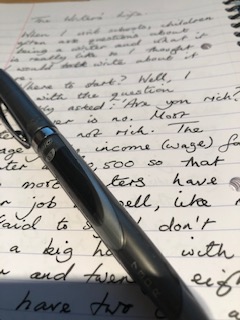
Writing and pen

When I visit schools, children often ask me questions about being a writer and what it is really like so I thought I would attempt to answer some of the most common questions I am asked here.

Are you rich?
The answer is no. Most writers are not rich. The average yearly wages for a writer is £10,500 so that means most writers have another job as well, like me. Unless, you are super succesful like JK Rowling. Then you can write all the time. I’m afraid to say I don’t live in a big house and have twenty-eight cats. I have two and a goldfish.

Are you famous?
No. Very few writers get recognised on the street. The ones that do tend to have been celebrities before they became writers, like David Walliams. They were famous for something else first. Of course, there are a few exceptions like Michael Rosen, Roger McGough or Anthony Horowitz who have also been on TV after their books became well-known. I’ve only been recognised in the street once by a girl whose school I had visited. She yelled, “Look, there’s that writer who came to my school. He’s going into that house!” Otherwise, I walk about never noticed. I could be sat by you and you wouldn’t know.

What do you do when you write? What’s it like?
When I write, I take myself out of the house away from distractions like the TV, cats, fish, reliable internet and go to a place I call ‘the office.’ There I can get endless cups of coffee for just £1.25.
I settle down at the table, look at the outline of my book I’m currently working on, open up my tablet and keyboard and begin writing. I write using a programme called Scrivener which was specially made for writers. While I write, I usually listen to music without voices to cut out any background noise that may distract me and put me off. I might write non-stop for an hour or three. It depends how easily the writing is coming. As I write, I talk to nobody except my characters and imagined audience. They are my only concern.
Writing can be lonely. You sit by yourself, not speaking, not knowing if your writing is any good or worth reading. You just hope it is and carry on. That is why I am also a member of two Writing Groups. There, I share my work, find out what people think of it, if my jokes work, and talk about writing issues such as the best way to solve a problem with point of view.
Sometimes things are different. Sometimes I get to meet my readers when I am invited to a school to do a talk or run writing workshops. Then I get to share my love of writing and talk about books and we do some writing together. It’s great fun.

Have you written any other books?
Yes. Three others but they’re not published yet. One is for grown-ups, one is a kind of Tolkien adventure, and another is about an elf which I’m sending to Literary Agents. I am also working on another one at the moment.

I hope all this helps clear up the things I’m most asked. If you’ve any other questions, just ask in the comment’s box below.

Writing Spaces


Tangled FX 2.1 (4 May 2018, 11:34:49) Swirls preset

Most writers have a favourite writing space where they like to write and I am no exception.  It is a place where we find it easier to switch into writing mode and concentrate  on the worlds we are creating. They are part of our routine and without them we can writing frustrating, full of distractions, a basic non-starter.

Where writers choose to write can be varied depending on finances, personality or necessity. Stephen King, the famous horror writer, in the early days of his career found himself strapped for cash and the only place he could go to was the cramped laundry room of his house next to the washing machine. Perhaps it was the whine of the spin cycle that helped him produce his book Carrie.

Mark Twain, the writer of children’s classic The Adventures of Huckleberry Finn, didn’t have that problem due to the fame and fortune his books brought him. He had a private study built away from his house in the garden where he used to go after a good breakfast to write during the day. If he was wanted by his family, they would blow a horn to fetch him. I can just dream of having such a writing place.

Roald Dahl, the writer of so many great children’s book (and my favourite kid’s author) was more modest in his writing space. He used a shed in his garden with a favourite armchair and a space littered with objects to inspire.

Charles Dickens also had favoured pieces of furniture: a desk and chair. It was so important to his writing that he would often get it shipped with him if he was going to be away from his home for a while.

I don’t have the garden size or finances for a shed or study but do have a ‘work room’ where I have a computer desk and swivel chair. This was where I typed up Wishbone Billy from my notes every evening in 2012 but it wasn’t where I created the first draft. Here, is where JK Rowling and I are similar. Her early drafts of Harry Potter were written in a cafe, for, as she put it, ‘You don’t have to make your own coffee, and you don’t have to feel like you’re in solitary confinement.’

I equally have to be with an easy supply of coffee and the gentle bustle of people as they come in and out of the pub I work in. I sit at my favourite table, slightly apart from the main part of the pub, under dim lights, with free coffee refills aplenty tapping away on my Bluetooth keyboard connected to my iPad mini whilst listening to the gentle notes of The Poet by Bruno Sanfilippo  (my go to writing music that always gets me in the zone). It is my writing place as I’m away from the distraction of daytime TV or easy access to the Internet – the internet at the pub is quirky at best so stops me from going down the wormhole of Twitter. Besides, it has the bonus that I can reward myself with a pint after a few productive hours of writing.

What’s your writing space?